
The short version
- Most campaign delays do not start with bad creators. They start with broken handoffs: the brief in email, feedback on WhatsApp, deadlines in a spreadsheet nobody updated.
- A brief sent as an attachment has no version control and no record of what the creator opened, so off-brief content cannot be traced to a cause.
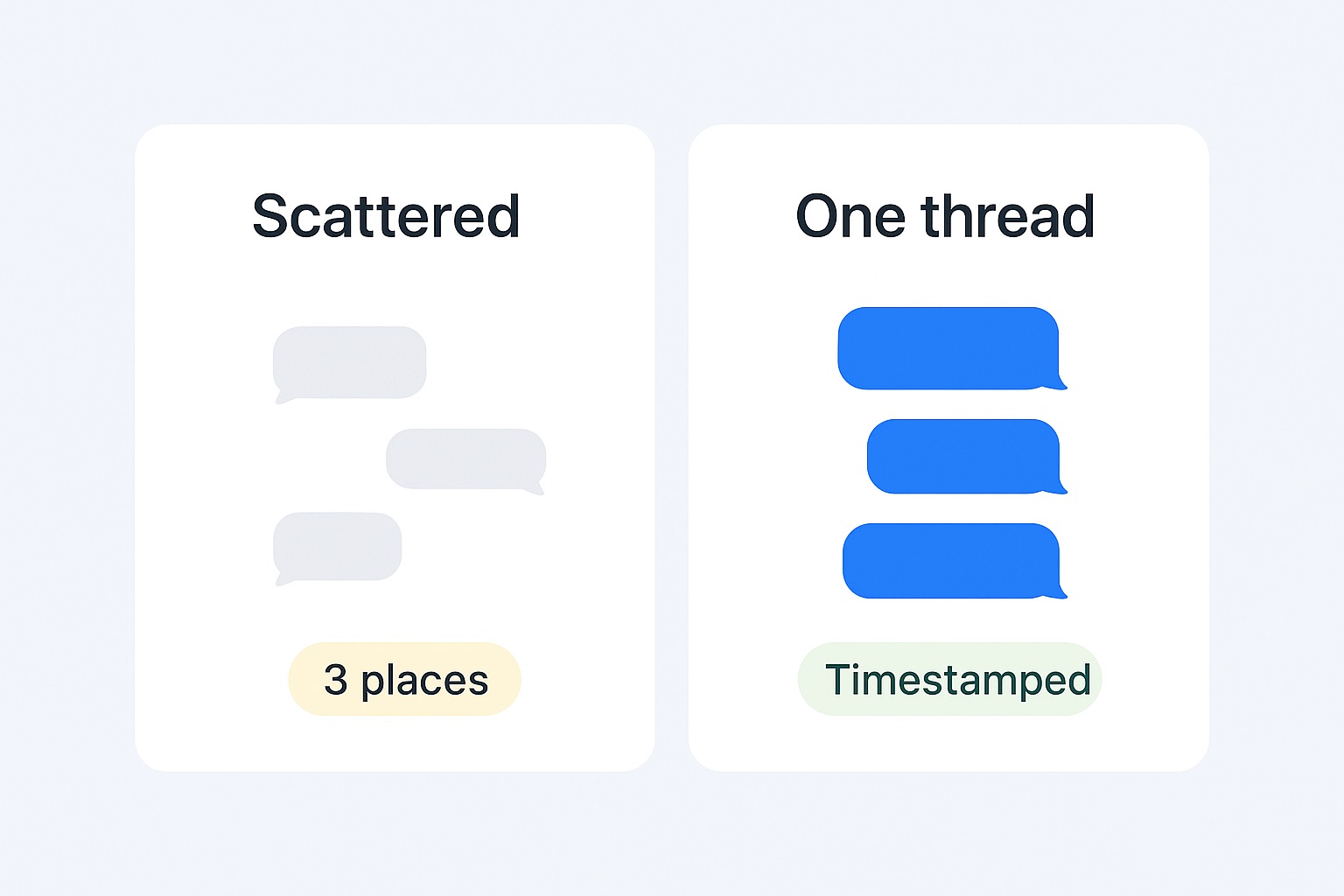
- Consolidating feedback into one timestamped thread is the single change that removes the most rework.
Twelve creators on the campaign. Two have not posted, one delivered content that does not match the brief, and the change request you sent on WhatsApp three days ago has not been answered. Finding out where things stand means moving between Instagram, a spreadsheet, WhatsApp, email and the brief itself, none of which agree.
The instinct is to blame creator reliability. Usually the cause is upstream: every handoff in the campaign crosses a tool boundary, and things fall through the gaps between them. What follows is where collaboration actually breaks, and what a system has to do to stop it.
Where collaboration actually breaks
The brief moves from the platform to email. Feedback moves from email to WhatsApp. Deadlines live in a calendar the creator cannot see. Each of those transitions is a place where information stops being shared and starts being remembered, and memory is where campaigns lose days.
The brief is the clearest example. Sent as an attachment or a WhatsApp message, it carries no version control, no read confirmation and no record of what the creator actually opened. When content comes back off-brief there is no way to establish whether the creator ignored the requirements, received an older version, or never opened it at all. Without that, the conversation becomes about fault rather than about fixing the content.
The five handoffs worth fixing
- Brief delivery. One versioned brief the creator opens in the system, with a record that they opened it. Off-brief content then has a traceable cause rather than a dispute.
- Feedback. This is the expensive one. Comments arrive by email from one person, Slack from another and a voice note from a third, and somebody has to consolidate them into a single instruction before the creator can act. Every hour spent on that consolidation is an hour the revision has not started.
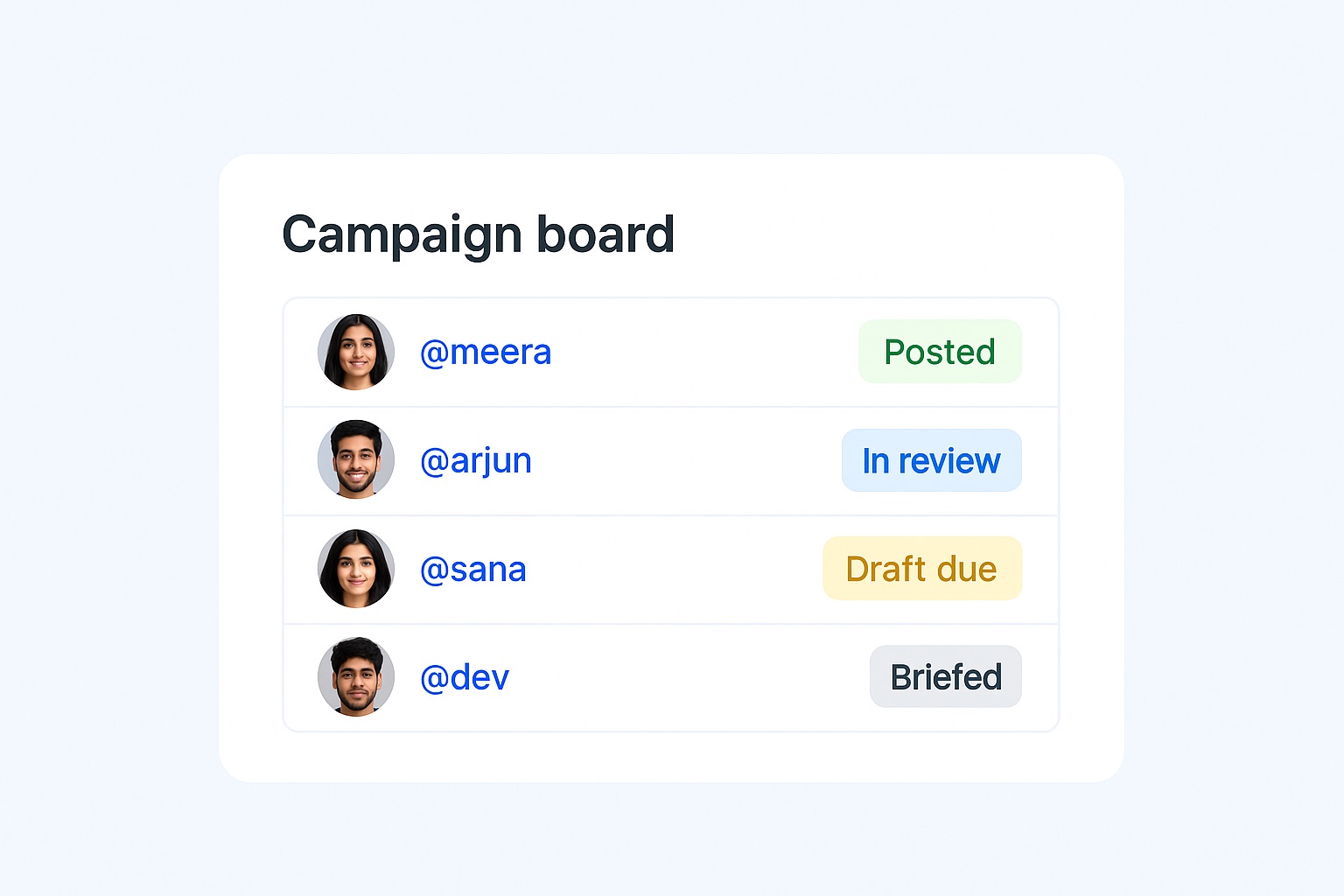
- Status. Whether a creator has been briefed, submitted, been approved or posted should be visible without opening a spreadsheet, because the spreadsheet is always one update behind.
- Go-live. You should know a creator posted before the client does. That only happens if live content is detected rather than reported.
- Commercials. Fee, deliverables and payment terms recorded where both sides can see them, so the end of a campaign is not a negotiation about what was agreed.
CultureX handles the feedback problem through the Operator Board, where submissions and comments sit in one place and every revision is timestamped. The creator receives a single clear set of changes instead of three partial ones, and nobody has to reconstruct the thread afterwards.
See CultureX in action
Keep briefs, submissions, feedback and approvals in one place, with every revision timestamped and every creator’s status visible.
What the lifecycle looks like when it runs in one place
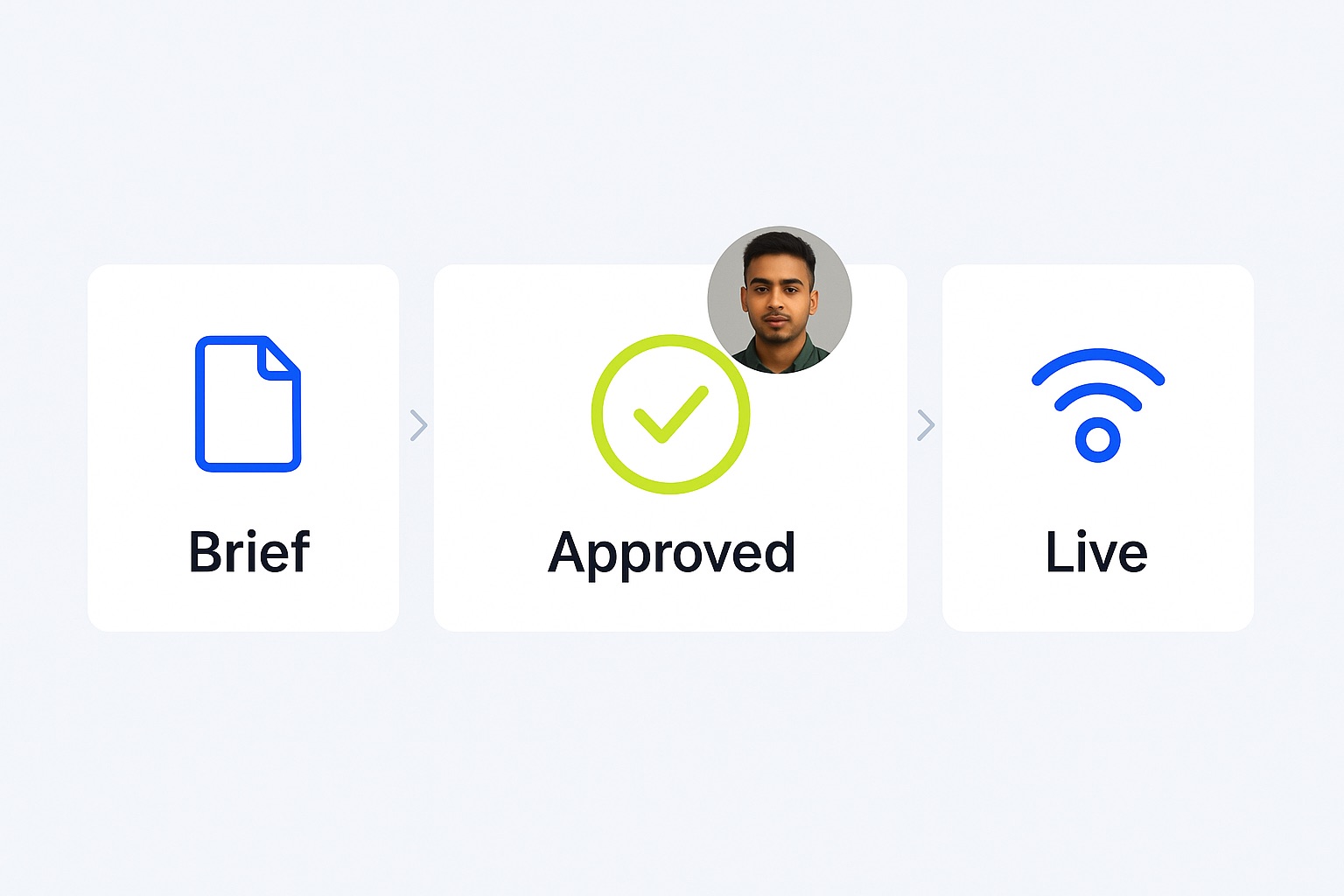
Brief goes out and is acknowledged. Creator submits a draft against it. Feedback is consolidated into one thread and returned once. The revision comes back, gets approved, and the go-live link is recorded. Once the post is live it is detected automatically and its performance attaches to the creator and the campaign without anyone sending a screenshot.
Nothing in that sequence is novel. What makes the difference is that no step crosses a tool boundary, so nothing has to be re-entered, re-explained or remembered. The effect shows up as capacity: an account manager’s limit is usually set by coordination overhead rather than by creator count, and removing the coordination raises the number of relationships one person can hold.
Working out where your own friction sits
Before changing tooling, it is worth locating which handoff is actually costing the time. These are the usual candidates:
- Nobody can answer “where is creator seven” without checking three places.
- Revisions take more than one round because feedback arrived in pieces.
- The client finds live content before the team does.
- Payment queries at the end of a campaign require reconstructing an agreement from chat history.
- Adding five creators to a campaign feels disproportionately harder than the first five. That is coordination cost scaling, not creator management.
If the problem is which creators you are working with rather than how you are working with them, niche fit and follower analysis come before this. Once content is live, campaign tracking covers measurement.
Frequently asked questions
What are influencer marketing tools?
Software covering the campaign lifecycle: discovery, shortlisting, outreach, briefing, content approval, tracking and reporting. Collaboration tools specifically handle the middle part, everything between agreeing to work together and the post going live.
How do they improve creator collaboration?
By removing tool boundaries between steps. One versioned brief with a read record, one consolidated feedback thread, visible status per creator, and automatic detection of live content. Most of the improvement comes from eliminating re-entry rather than from any single feature.
How do content approval workflows work?
The creator submits a draft against the brief, reviewers comment in one place, comments are consolidated into a single response, and each revision is timestamped so the history is legible later. The point is that the creator receives one instruction rather than several partial ones.
How many creators can one account manager handle?
It depends almost entirely on how much coordination each relationship costs. When briefs, feedback and status live in one system the ceiling rises substantially, because the manager is handling exceptions rather than chasing updates on everything.
Does this replace direct contact with creators?
No, and it should not. It removes the administrative traffic so the direct contact can be about the creative work rather than about deadlines, file versions and where the latest feedback went.