
The short version
- A white-label platform is software an agency licenses and presents under its own brand, so the client experiences the agency’s technology rather than a third party’s.
- The line that matters is whether the whole workflow runs under your brand or only the PDF does. Branding a report while discovery, outreach and approvals happen elsewhere is cosmetic.
- Live branded dashboards change the retention conversation more than any feature, because the client checks your numbers instead of waiting for them.
Most agencies arrive at this question the same way. A client asks where the numbers came from, someone opens a dashboard, and the client spends the rest of the call looking at another company’s logo. Nothing was wrong with the work. The client just learned that the capability they are paying for belongs to somebody else.
That is the problem white labelling exists to solve, and it is worth being precise about what it does and does not fix. This post explains what a white-label influencer marketing platform actually is, the four questions that separate real white labelling from a branded export, and what to check before committing.
What white label actually means here
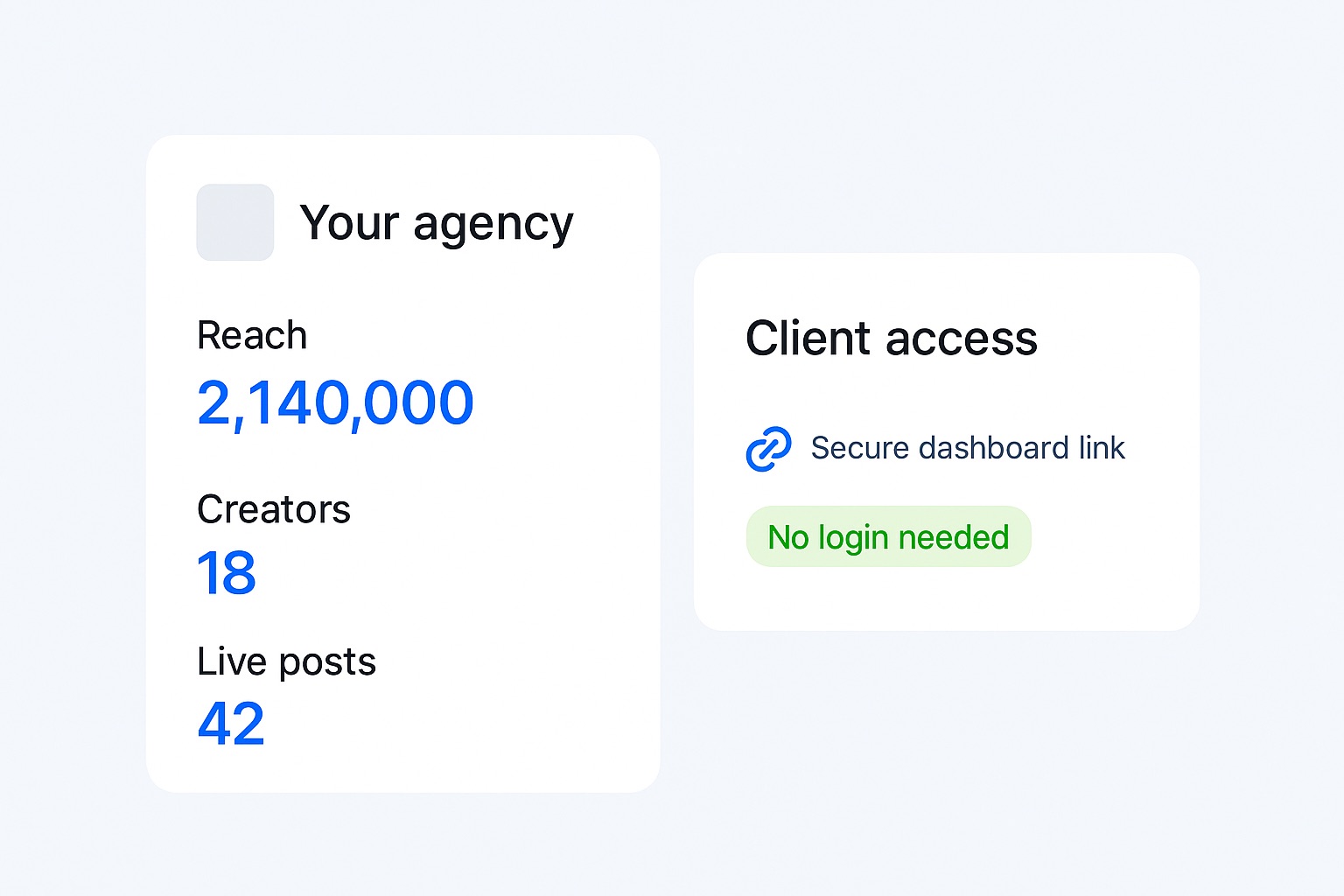
An agency licenses the software and presents it to clients under its own identity: logo, colours, domain, report templates. To the client it is the agency’s platform. Underneath, the agency has not built or maintained anything.
The alternative most agencies are living with is running campaigns through a platform whose name appears on every client-facing output. That is not a branding inconvenience, it is a positioning problem. It trains the client to associate the capability with the tool rather than the agency, which makes the agency look like a service wrapped around software the client could license directly.
Four questions that separate real white labelling from a branded PDF
Plenty of platforms describe themselves as white label when what they offer is a logo slot on an export. These four questions find the difference quickly.
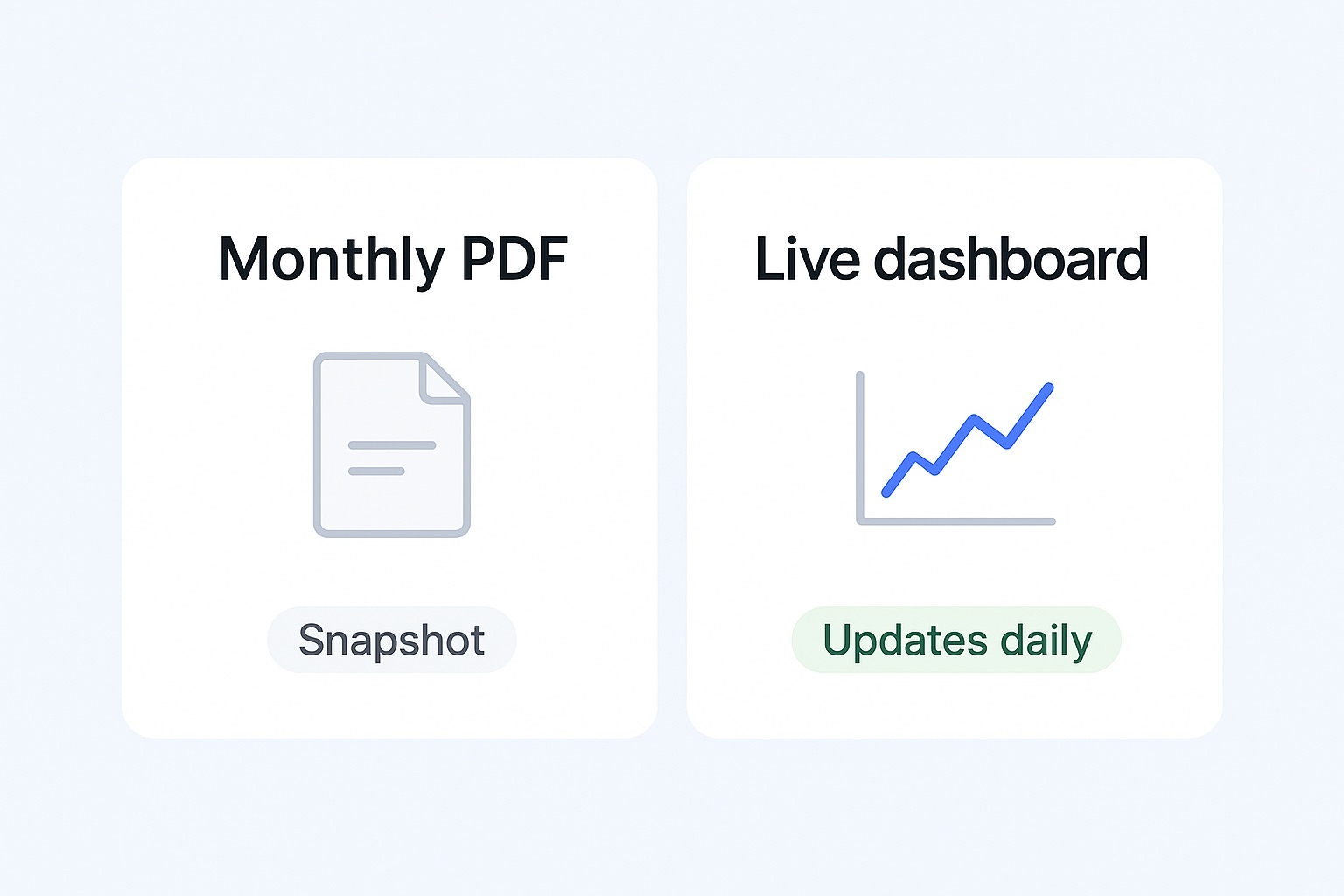
- Does the client see a live dashboard or a monthly PDF? A PDF is a snapshot the client receives once and cannot interrogate. A live dashboard is an ongoing view they can open whenever they want, which is a materially different relationship.
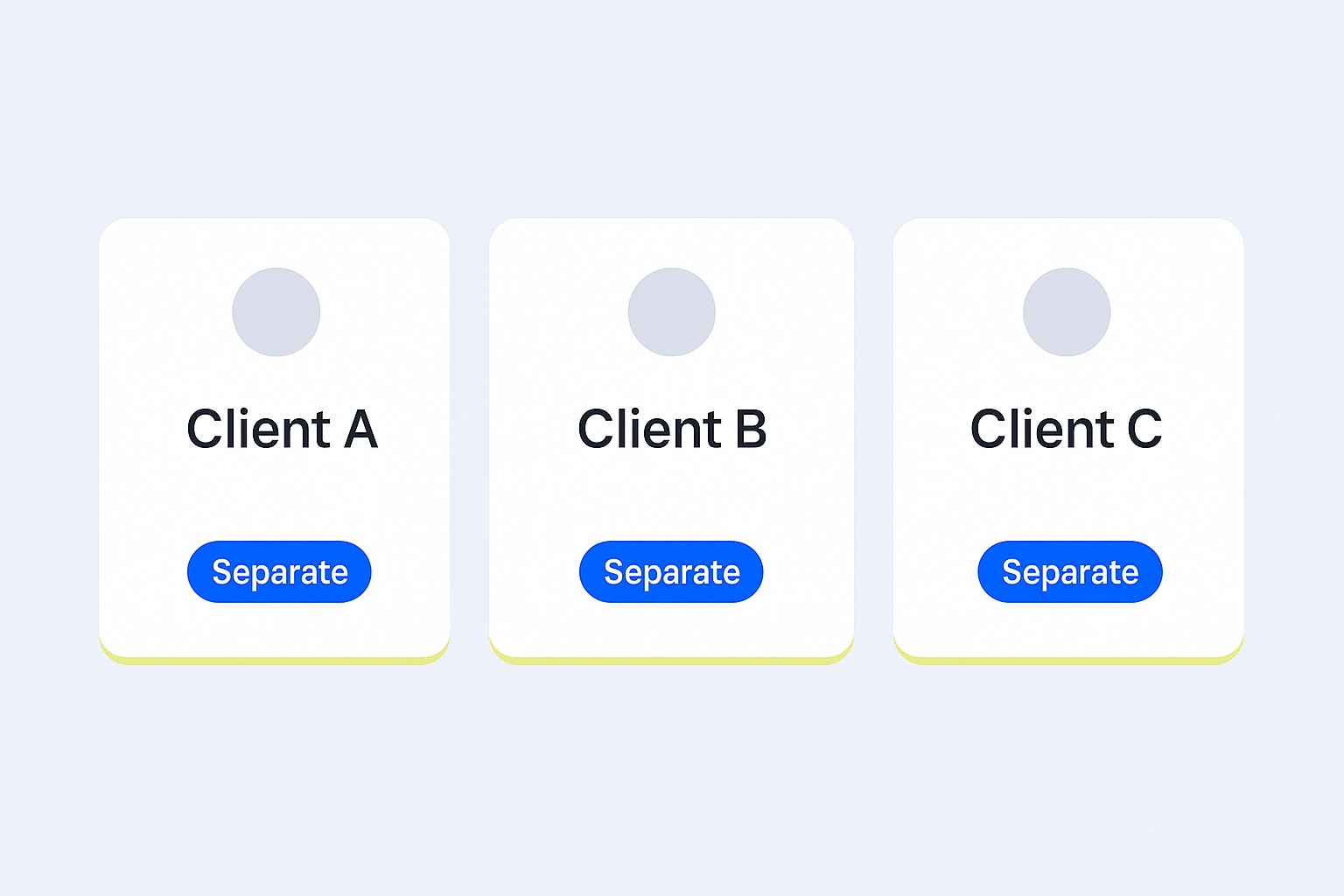
- Can separate client environments be maintained? An agency running six clients needs six separated workspaces, not one workspace with careful filtering. Without that, cross-client exposure is a matter of somebody being careful.
- Can discovery be delivered under the agency’s brand? If shortlists arrive with someone else’s watermark, the most visible part of the work is still branded by the vendor.
- Does the campaign workflow actually run inside the platform? If outreach, approvals and contracts happen in email and WhatsApp and only the report is branded, white labelling has been applied to the one artefact that mattered least.
What branded reporting changes about retention
The reporting question is worth separating out, because it moves commercial outcomes rather than just perception.
When reporting is a monthly PDF, the client’s experience of the agency is a document that arrives after the fact. Questions get asked at the end of the month about decisions taken three weeks earlier. When reporting is a live dashboard under the agency’s brand, the client checks numbers when they want them and stops experiencing the agency as a gatekeeper standing in front of their own campaign data.
In CultureX that takes the form of a secure dashboard link carrying agency branding rather than a platform logo. Numbers update daily for up to 90 days and the client does not need a login, which removes the friction that usually stops clients using dashboards at all. The agencies page covers how that sits alongside the rest of the workflow.
See CultureX in action
Run discovery, outreach, approvals and reporting under your agency’s brand, with live client dashboards instead of monthly PDFs.
What else runs under your brand
Reporting is the visible part. Three other places carry agency branding and take real time out of the week:
- Bulk outreach. Contacting creators as a batch rather than one at a time, which is where onboarding for a large campaign usually stalls.
- Contracts. Templates carrying your logo, placement, formatting and clause structure, so an agreement looks like it came from the agency rather than from a tool.
- Shortlists and creator decks. The output clients see earliest in a campaign, and the one most often sent out with a vendor watermark on it.
Deciding whether this is worth changing
The question is not whether branded reporting is nicer, it is whether the current setup is costing you something you can name. Four things usually are:
- Clients ask which platform you use. Once they know the name, they can price it, and the agency’s margin becomes a conversation.
- Reporting is a monthly scramble. Numbers are assembled by hand into a deck rather than being continuously available.
- Client data lives in one shared workspace. Separation depends on process discipline rather than on the software.
- Campaign work happens outside the platform. Briefs by email, feedback on WhatsApp, approvals in a spreadsheet, and the platform used only at reporting time.
If the question you are actually weighing is white label against an enterprise licence rather than what white label means, the white-label versus enterprise comparison works through that decision. For the collaboration side of agency operations, see how tools improve creator collaboration.
Frequently asked questions
What is a white-label influencer marketing platform?
Software an agency licenses and presents to clients under its own branding, covering logo, colours, domain and report templates. The client experiences it as the agency’s technology while the agency avoids building or maintaining any of it.
Why do agencies use them?
To keep the client’s perception of capability attached to the agency rather than to a vendor, and to avoid the conversation that follows a client discovering they could license the same tool directly. The operational gain, one system instead of five, usually matters as much as the branding.
What features actually matter?
Separate client workspaces, live branded dashboards rather than exports alone, branded discovery output, branded contracts, and a campaign workflow that genuinely runs inside the platform. If outreach and approvals happen elsewhere, the white labelling is cosmetic.
How is it different from a standard platform?
A standard platform puts its own name on everything the client sees. A white-label platform puts the agency’s name there instead. The underlying capability can be identical; what differs is who the client believes is providing it.
How do agencies price white-label services?
Usually as a retainer or a percentage of campaign spend, with the platform cost absorbed rather than itemised. Passing it through as a line item reintroduces exactly the conversation white labelling is meant to avoid.