
The short version
- A creator with 100,000 followers and an 80% fake audience delivers the same real reach as one with 20,000 genuine followers, and you paid five times more for it.
- Six checks catch almost everything: growth shape, engagement rate against tier, comment quality, audience geography, repeat commenters and story view ratio.
- Done by hand that is one to three hours per creator. Run it as a filter before outreach instead, so weak profiles never reach your shortlist.
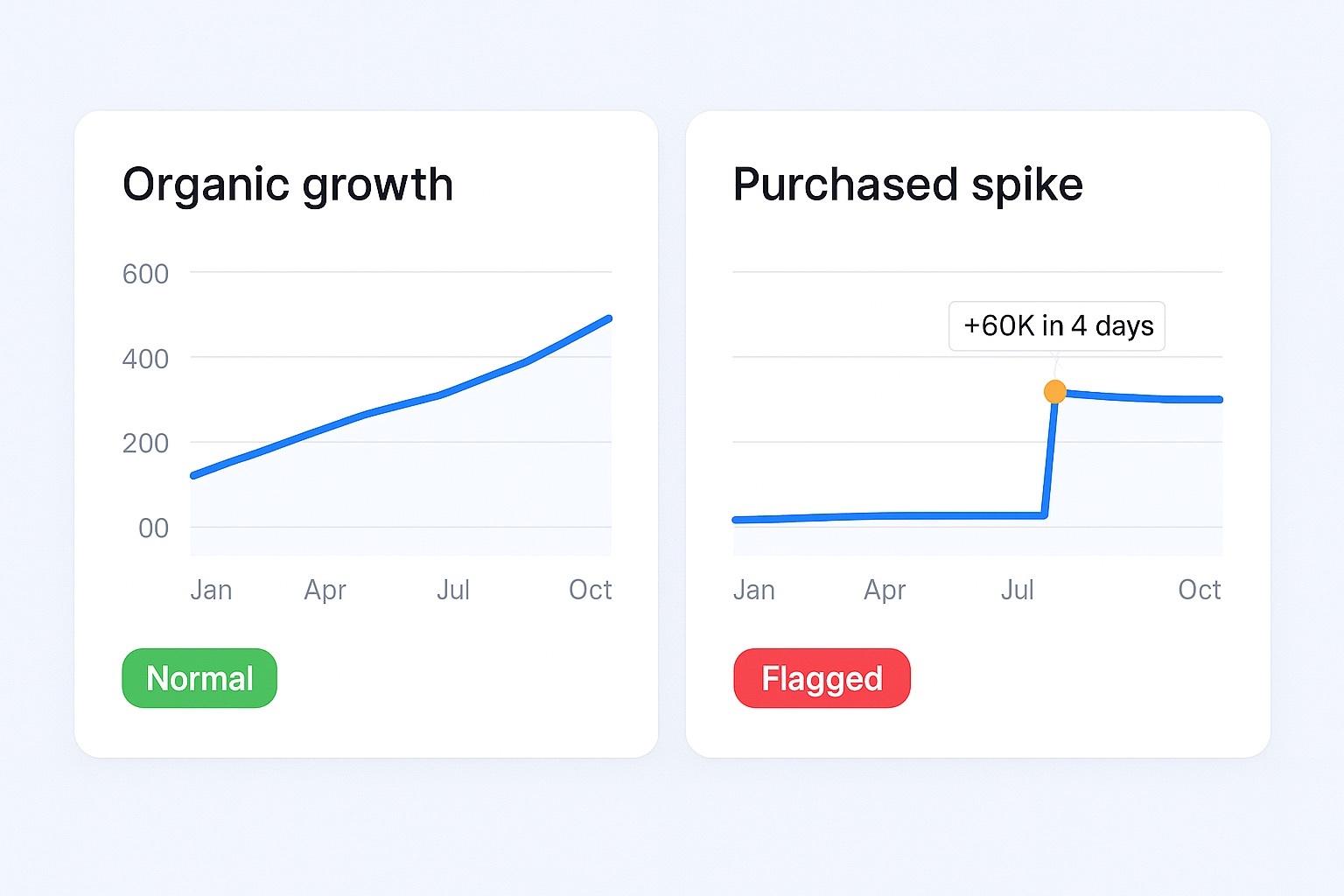
You signed off on a creator with 180,000 followers. Clean feed, decent engagement rate on paper. Three weeks in, click-throughs are near zero, the reach numbers do not match the screenshots you were sent, and the follower chart shows 60,000 new followers arriving over four days with no viral post and no press to explain it.
Most brands in that position did not miss something obvious. They just did not know what to look for before signing. Influencer follower analysis is not paranoia, it is a short check that costs nothing before the contract and quite a lot after it. Below are the six things to check on any profile, and how to run those checks as a filter rather than a chore.
Why this check happens before the conversation, not after
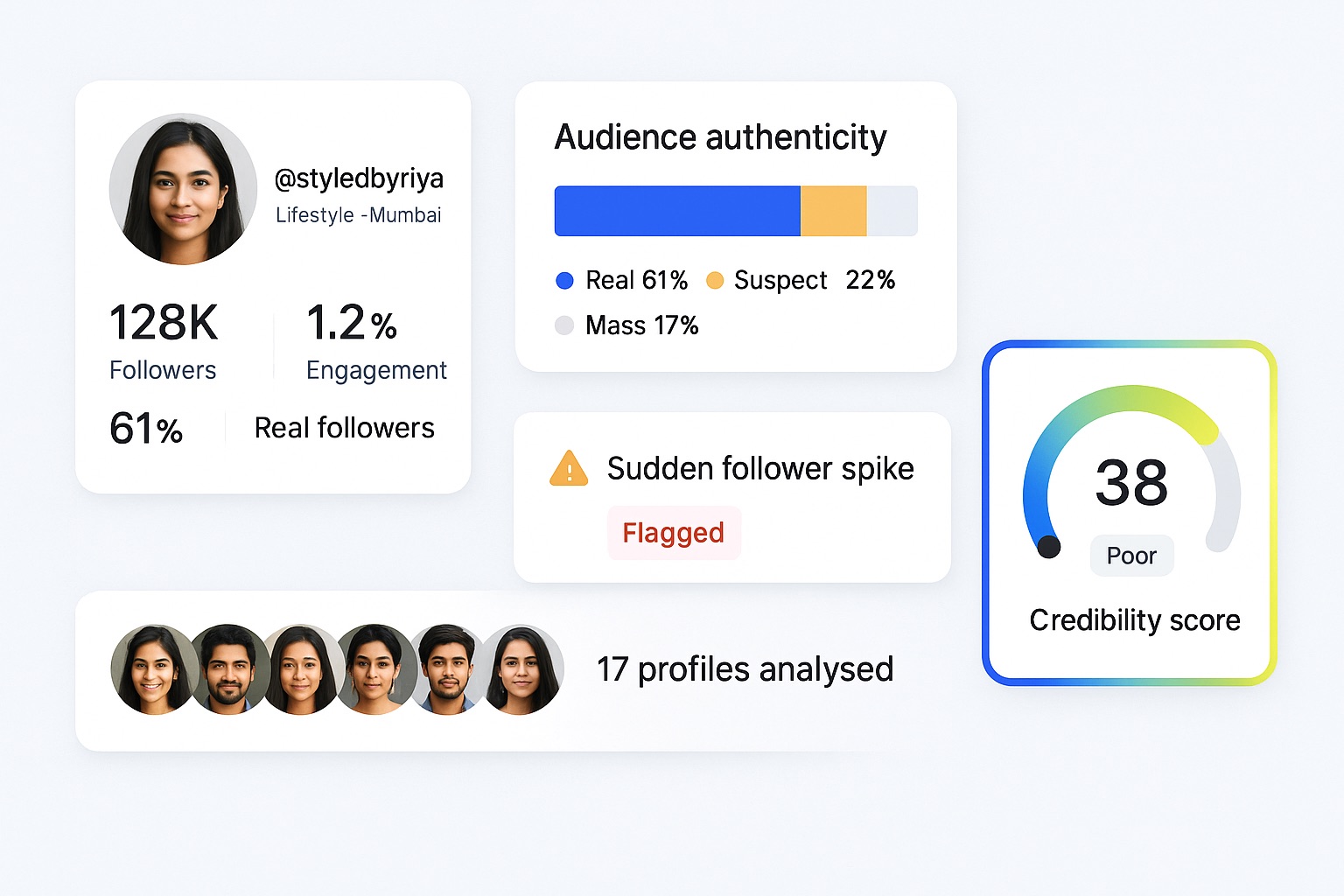
The arithmetic is unforgiving. Pay for 100,000 followers where 80% of the audience is fake and you have bought the reach of a 20,000-follower creator at five times the price. Nothing about the campaign execution can recover that, because the money was lost at selection.
There is a second reason to run the check early. Once a creator knows a brand is interested, asking for audience insights stops being a neutral request and becomes a negotiation. Screenshots arrive cropped, or from a good month. Run the credibility check before you express interest, and you are reading data the creator did not prepare for you.
The six things to check before briefing any creator
1. Does the follower growth chart make sense?
Real growth has a cause behind it: a post travelled, a collaboration with a larger account, a press mention. When a count jumps 10,000 or more in a day with nothing to explain it, the likeliest explanation is a purchased package.
The shapes are easy to tell apart once you have seen both. Organic growth accelerates and then settles into a slope. Purchased growth spikes and stops dead, often followed by a slow decline as the platform removes accounts. Pull the 12-month history before you approach anyone, and if the pattern does not make sense, find out why before the brief goes out.
2. Is the engagement rate in the right range for the tier?
A 100,000-follower Instagram account at healthy engagement generates roughly 2,000 to 5,000 likes per post. Below 1% at that size is a signal, not a rounding error.
The reverse deserves the same suspicion. An unusually high rate driven almost entirely by likes, with barely any comments, usually means an engagement pod. Pods coordinate likes easily and fall apart at the comment level, because comments take effort. Average the last ten posts and compare against what is normal for that tier and platform rather than against a single industry figure.
3. Do the comments read like people?
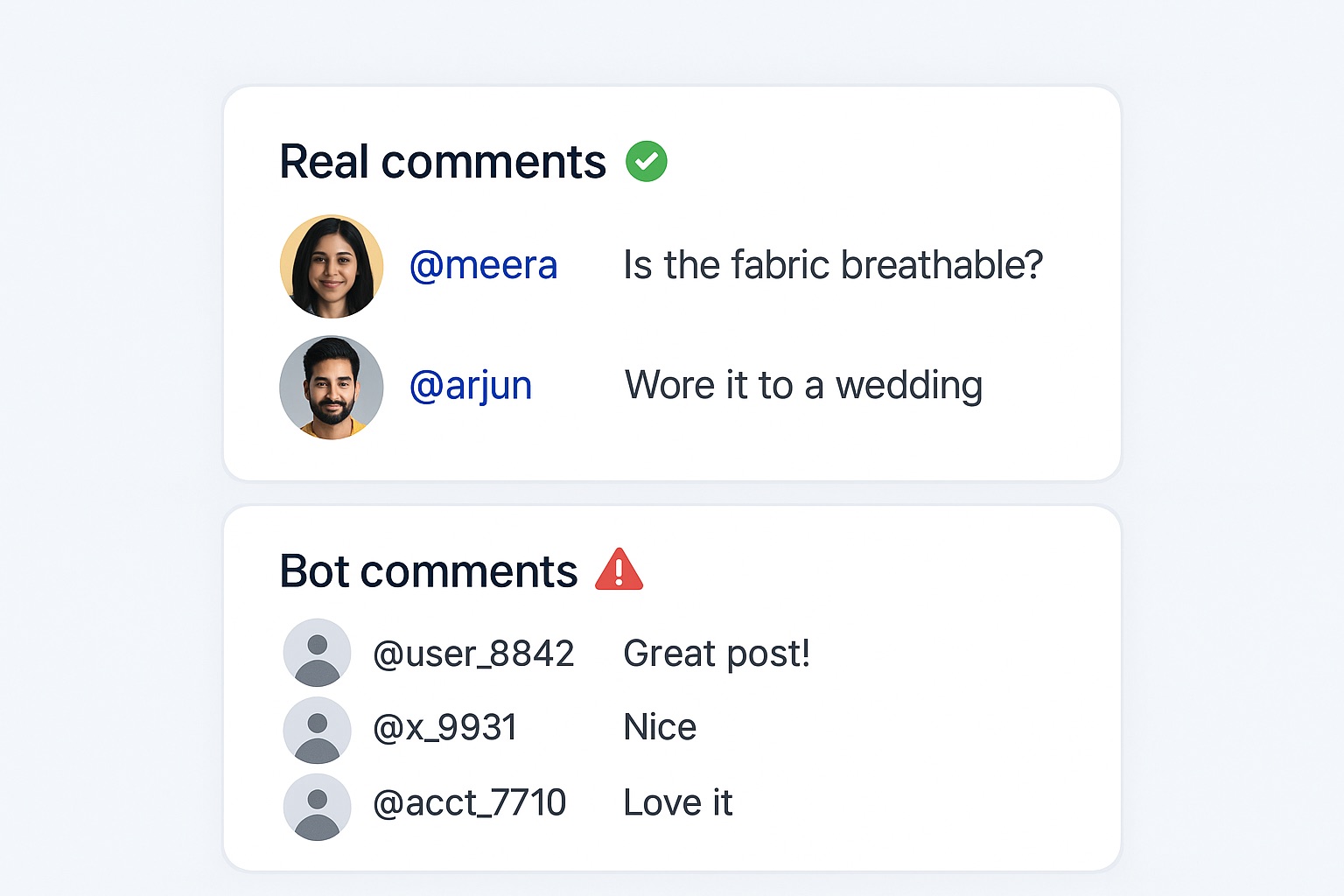
Real comments are specific to the post. They ask something, or react to a detail that only makes sense if the person watched. Bot and pod comments are interchangeable: “Great post!”, a fire emoji, a single word that would fit under any piece of content ever published.
Read the comment sections on the last five to ten posts and look at who is commenting. Accounts with no profile photo, no posts of their own and thousands of followers are not an audience. If more than about 30% of comments are emoji-only or one-word reactions, treat the headline engagement rate as unproven.
4. Does the audience geography match your target?
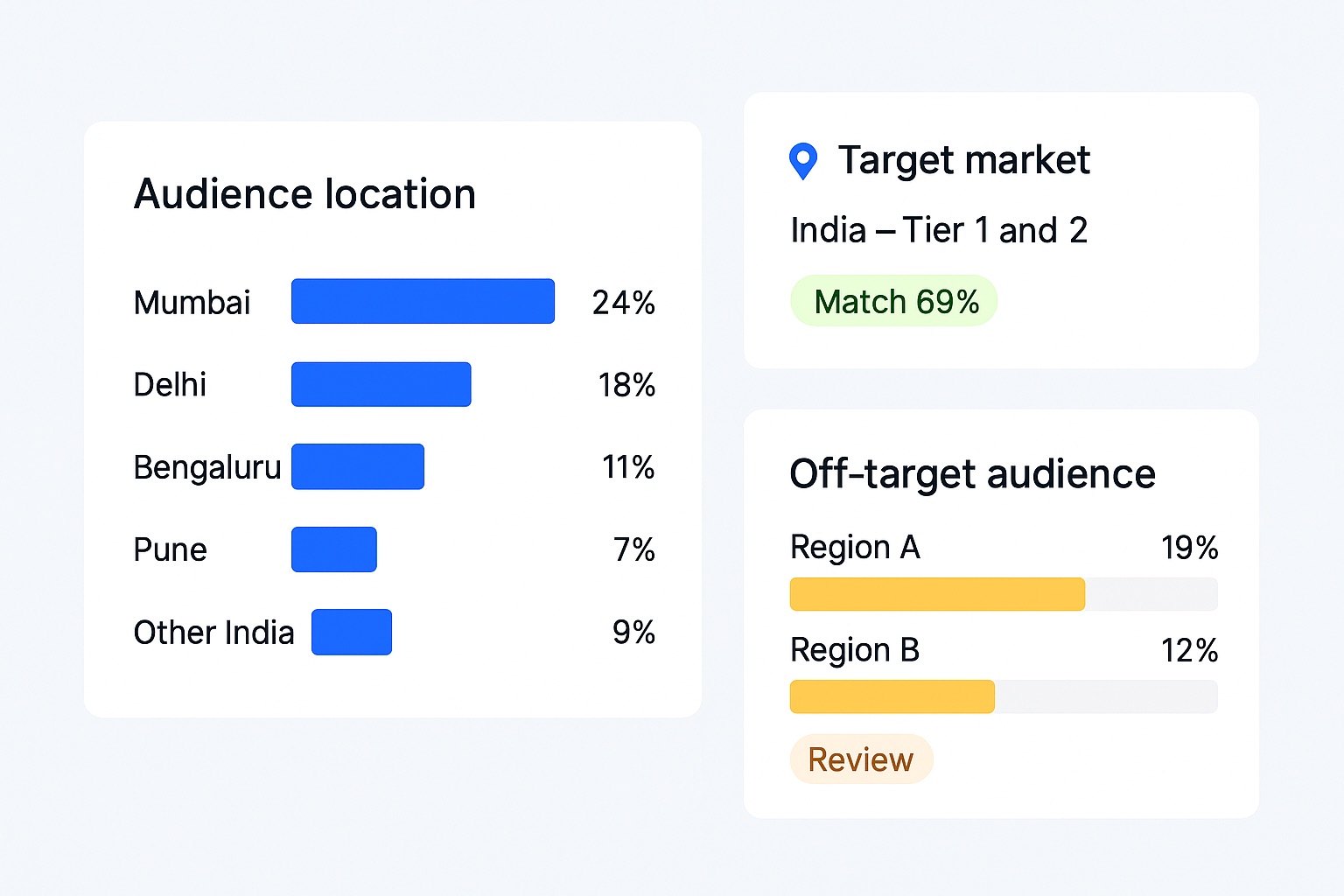
A creator building an Indian audience should show followers concentrated in Indian cities. When 60% of the audience sits in countries unrelated to the creator’s content, language or niche, that is a purchased-follower signal rather than international appeal.
This is also where follower count misleads most often. A lifestyle creator with 200,000 followers looks like the stronger pick until you see that most of that audience is outside your market, at which point a 30,000-follower creator whose audience actually lives in your target cities is worth more to the campaign. The influencer suite filters by where the audience is located rather than where the creator is based, which are two very different things.
5. Are the same accounts commenting every time?
Engagement pods are private groups, usually on Telegram or WhatsApp, where members agree to like and comment on each other’s posts the moment they go live. The result is a sharp spike in the first hour from a recurring cast of accounts.
Three things give it away: the same handles appearing across multiple recent posts, engagement that spikes inside 60 minutes and then flatlines, and identical short comments turning up under several creators in the same niche at the same time. A comment section dominated by accounts that are also commenting on three competitors that hour is worth flagging whatever the engagement rate says.
6. Do story views line up with the follower count?
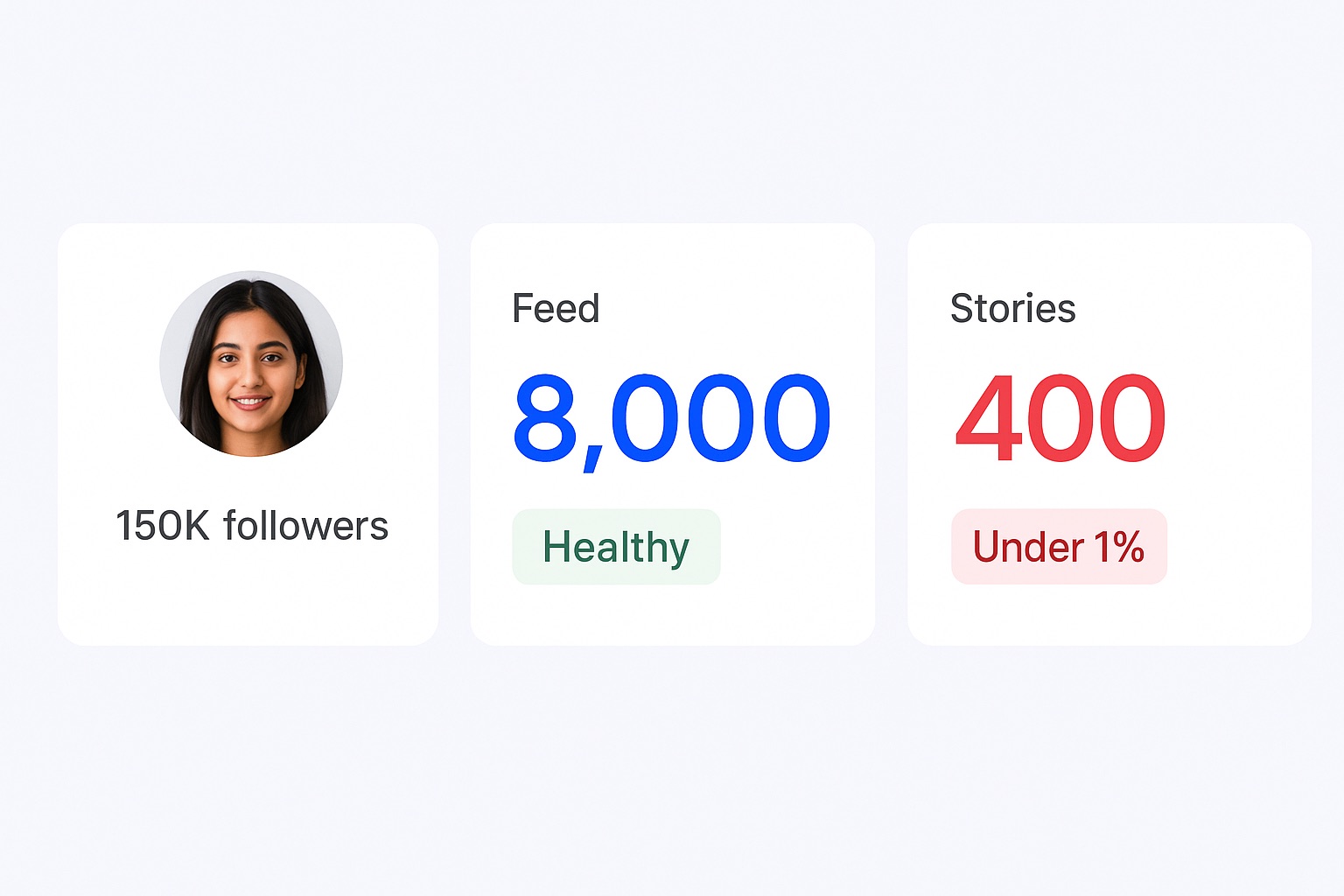
Stories are the hardest surface to fake. They disappear in 24 hours, which makes coordinating pod activity against them impractical, and bots do not watch them at all.
So the ratio is revealing. A creator with 150,000 followers pulling 8,000 likes a post but 400 story views has a problem worth naming. Story views should broadly track the feed engagement rate. When story views sit consistently below 0.5% of follower count while feed engagement looks healthy, the feed is the number being managed.
What this costs by hand, and what changes when it is automated
Done properly, a single creator audit is one to three hours: growth history, engagement across multiple posts, reading comments, checking audience location, comparing story ratios. For a 20-creator shortlist that is 20 to 60 hours of analyst time before a brief goes out, which is why in practice it gets skipped or reduced to a glance at the follower count.
Running the same checks across the whole database before shortlisting changes the order of operations. In CultureX every profile carries these signals in the discovery results:
- Real follower percentage. Active accounts that follow fewer than about 1,500 profiles, so they still see what they follow. This varies far more than people expect: two accounts at 60,000 followers can read 74% and 49%.
- Suspicious account rate. Abnormal follow ratios, no posting history, bot-pattern behaviour. Individual creators range from under 5% to above 20%, so the category average tells you nothing about the profile in front of you.
- Social Score. A composite of audience credibility, engagement rate, follower growth, follow ratio and posting consistency, which one viral post or a bought spike does not move the way raw engagement rate does.
- Comment analysis. An NLP pass over comment patterns across every post, looking for repetitive structures and bot-speak, rather than the handful of posts a human would sample.
Follower data refreshes every two weeks and full audience data monthly, which matters for the check nobody remembers to repeat: a creator who passed six months ago may have bought followers since. For ambassadors and retainers, re-run it quarterly.
See CultureX in action
Screen 400M+ creator profiles for real follower percentage, suspicious accounts and Social Score before you send the first message.
Turning it into a process your team repeats
The teams that stop losing budget to fake audiences are not the ones who never encounter them. They are the ones who put a threshold in writing and apply it before the conversation starts.
- Set the standard first. Decide the minimum real follower percentage and the maximum suspicious rate you will accept, before you start looking. Regulated categories like finance and healthcare need stricter content checks on top.
- Filter, do not audit. Apply audience quality criteria at the discovery stage so profiles that fail never reach the shortlist, instead of auditing a list you have already fallen in love with.
- Keep a short human pass. Fifteen to twenty minutes per shortlisted creator, reading recent comments and skimming the growth chart. Not a full audit, just a sanity check on what the data said.
- Record what you saw. Save real follower percentage, suspicious rate, engagement and audience location at the point of signing, so a later drop in performance can be explained rather than argued about.
The choice is fairly plain. Keep selecting on follower count and surface engagement and absorb the loss when those numbers turn out to be inflated, or screen for credibility before the first conversation. If you want the wider set of checks that sit around this one, the vetting checklist covers niche fit, audience fit and content safety alongside audience quality, and engagement rate benchmarks explains what good looks like per tier.
Frequently asked questions
What is influencer follower analysis?
It is the practice of examining a creator’s audience before working with them, rather than trusting the follower count. You are checking whether the audience is real, active and relevant to your campaign, and identifying fake followers, bot activity and inflated engagement before any budget is committed.
How do I check if an influencer has fake followers?
Look for a large follower count paired with weak engagement, comment sections full of generic replies, and sudden follower jumps with nothing to explain them. Then check whether the audience location matches the market you are targeting, and compare story views against follower count. CultureX surfaces these signals on every profile so you are not assembling them by hand.
What is a good real follower percentage?
There is no single number worth quoting, because the spread between creators is wide. Two accounts at 60,000 followers can show 74% and 49% real followers. That is exactly why the figure has to be checked per profile rather than assumed from a category average.
What is an engagement pod?
A group of creators who agree to like and comment on each other’s posts as soon as they publish, which inflates the numbers without indicating that content reached a genuine audience. The signs are the same accounts recurring across posts, a spike inside the first hour that then flatlines, and identical short comments appearing under several creators in the same niche.
How often should follower quality be re-checked?
Before every new campaign, and quarterly for ambassadors or anyone on a retainer. Audience quality changes: an account that was clean six months ago may have bought followers since, so a check that is not repeated is a check with an expiry date on it.