
The short version
- The hours agencies lose are concentrated in two places: assembling shortlists and assembling client reports. Both are mechanical, and both are where automation actually pays.
- AI is good at screening scale, reading thousands of comments and calculating unique reach. It is bad at relationships and brand-safety judgement, and those are the parts clients pay for.
- Roll it out at one task, the one costing the most hours now, so the before-and-after is measurable rather than a matter of opinion.
The pitch decks make this sound like a transformation. In practice, what changes in an agency is narrower and more useful: a few specific tasks that consumed whole days stop consuming them, and the team spends that time on work a client can actually see.
The useful question is not whether AI helps but where. Below are the tasks where automation genuinely changes the arithmetic, the ones where it does not, and how to introduce it without disrupting a working team.
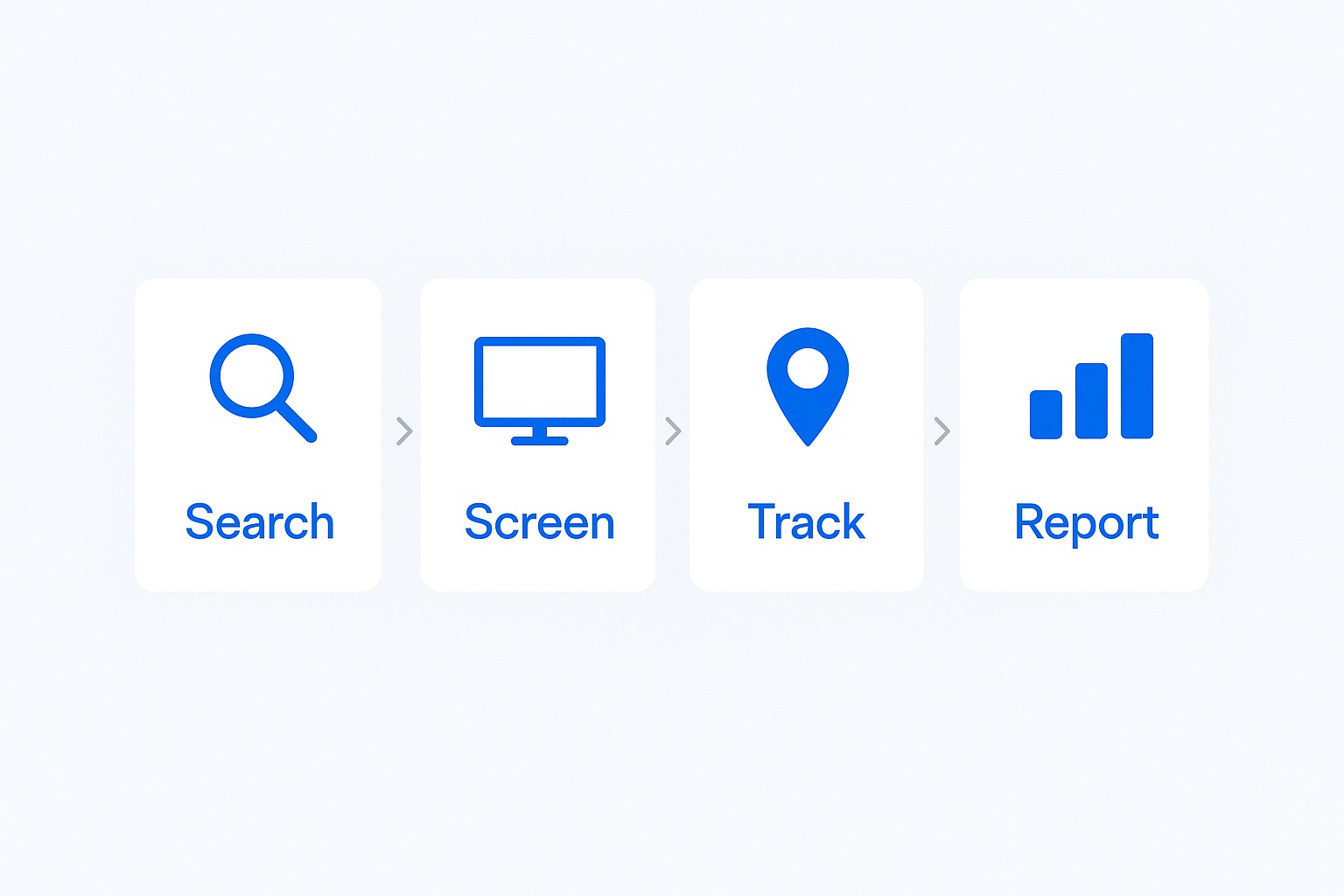
Where the hours actually go
Ask any account team where the week disappears and the answer is rarely campaign strategy. It is building shortlists, verifying profiles one at a time, chasing live links, and rebuilding the same client report every month in a slightly different shape.
Those tasks share a property: they are mechanical, high-volume and quality-checked against fixed criteria. That is exactly the profile automation handles well, and it is why the gains show up as reclaimed days rather than as better ideas.
Where automation genuinely helps
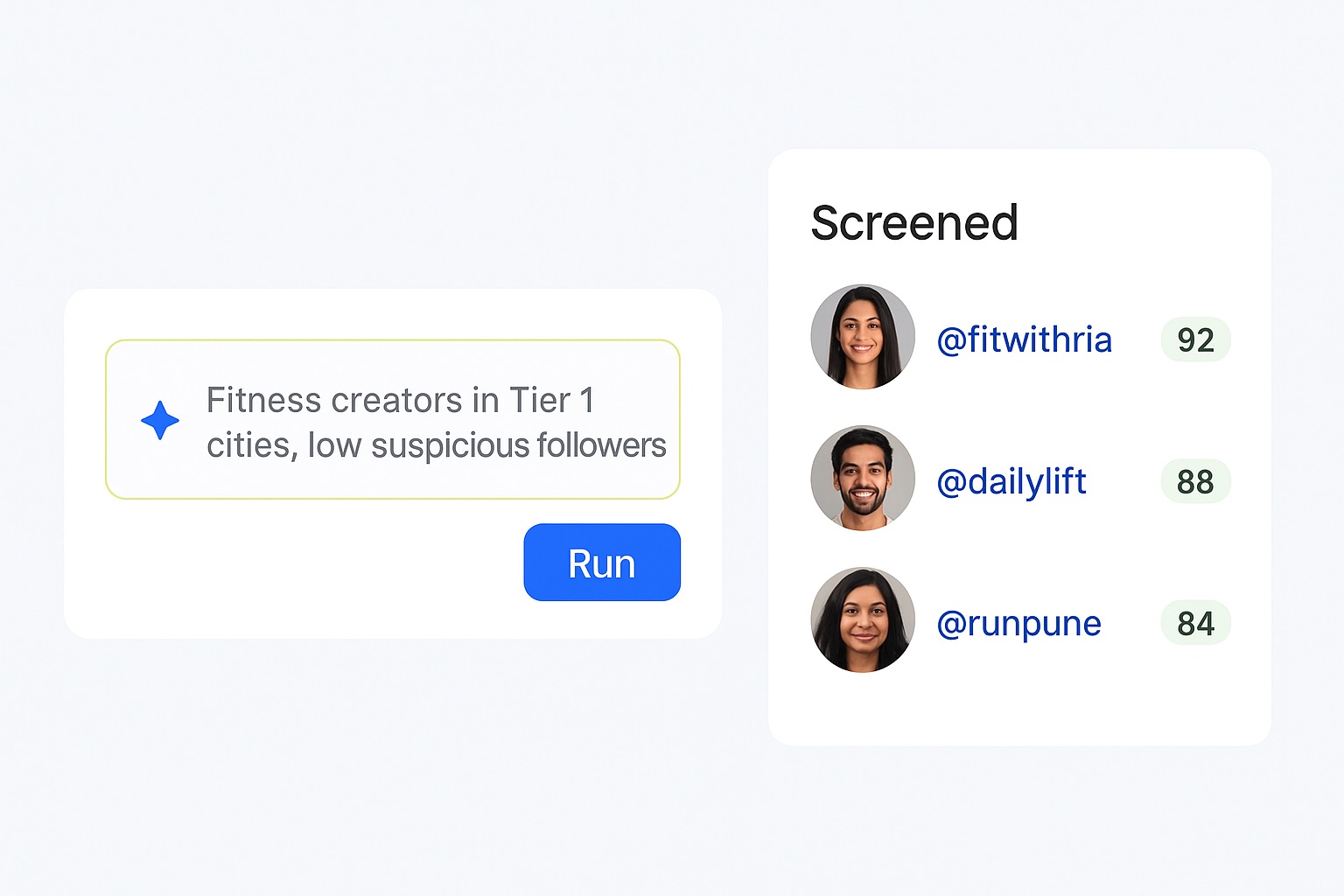
- Finding the right creators rather than many creators. A natural-language search, “fitness creators in Tier 1 Indian cities, low suspicious followers, posting at least daily”, returns a screened set instead of a long list to filter by hand.
- Telling whether an audience is real. Real follower percentage, suspicious account rate and Social Score attached to every profile, so credibility is a filter rather than an audit.
- Calculating actual reach. Audience overlap across a shortlist, which is the difference between a defensible unique reach figure and a sum of follower counts.
- Reading thousands of comments. An NLP pass scoring sentiment positive, negative or neutral at post level and campaign level, which no team reads manually at volume.
- Having the report ready before the call. Live content detected automatically and metrics assembled continuously, so reporting is a review rather than a build.
Discovery and reporting are where most agencies find the largest single savings, which is also why they are the sensible places to start.
What still needs a person
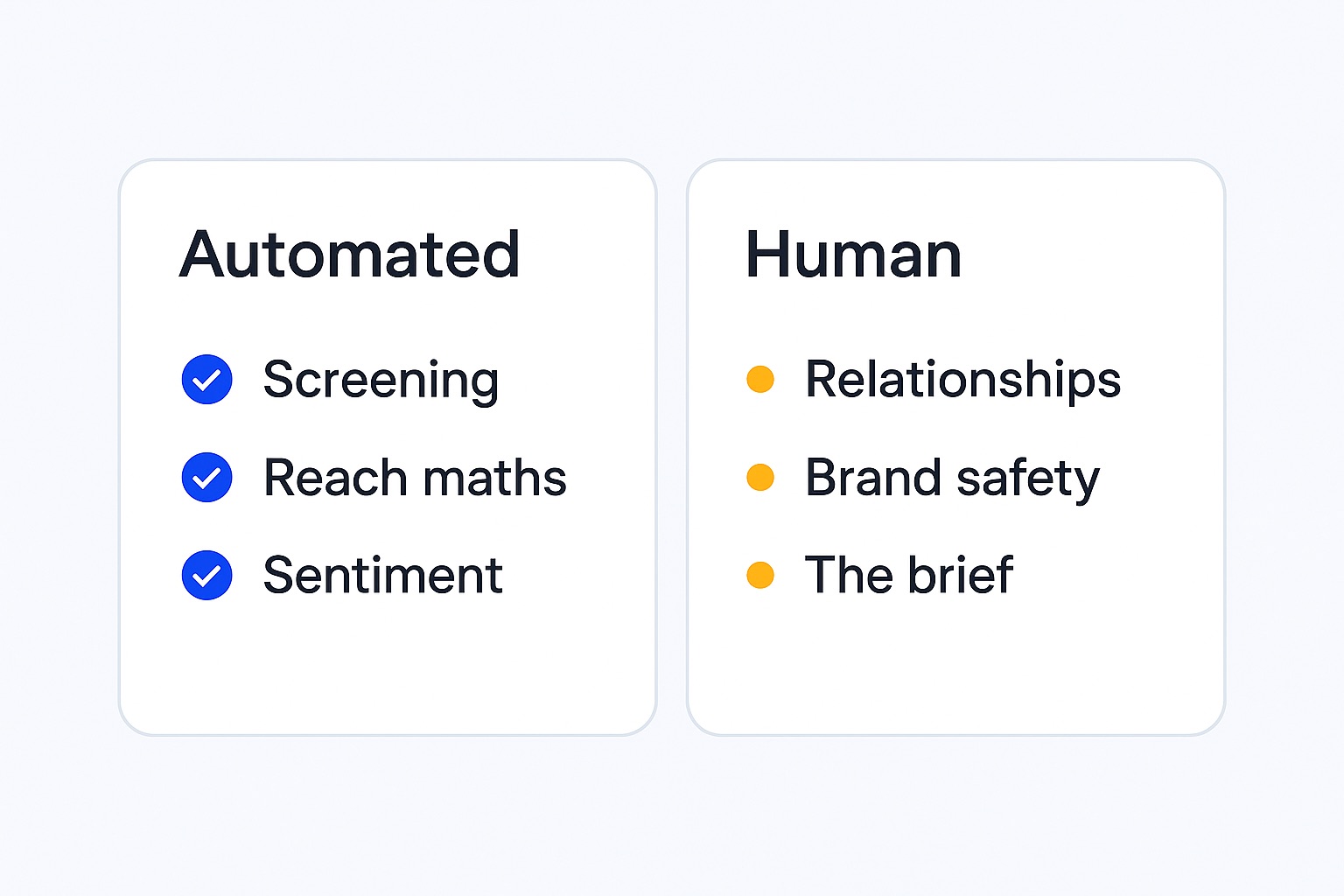
Being clear about the limits is what keeps this credible with clients.
- Creator relationships. A system can identify who fits. It cannot build the trust that makes a good creator accept your brief over someone else’s, or make them go slightly beyond it.
- Brand-safety judgement. Automation flags unusual activity and negative sentiment. Whether a creator’s recent controversy actually matters for this brand and this campaign is a judgement call with commercial consequences.
- Writing the brief. A system can tell you which formats perform in a category. It cannot write a brief that reads like a creative conversation, and briefs that feel generated reliably produce content that looks generated.
See CultureX in action
Screen creators, calculate unique reach and assemble client reporting automatically, so the team spends its time on the work clients notice.
How to roll it out without disrupting the team
The common mistake is starting everywhere at once, which produces a lot of half-adopted tooling and no measurable result.
Pick the single task costing the most hours right now. For most agencies that is creator discovery or client reporting, and both have the useful property of being easy to measure before and after: hours per shortlist, hours per monthly report. Run it on one client for one cycle, record the difference, then extend. A number from your own agency settles internal debate faster than any vendor claim.
The second thing worth doing early is agreeing what stays human. Writing that down prevents the failure mode where automation quietly extends into relationship and judgement work and the output starts feeling generic to clients.
Judging whether your agency is ready
Readiness here is practical rather than technical. If several of these are true, there is a measurable saving available:
- Shortlist building is measured in days.
- Reporting is rebuilt by hand every month.
- Nobody can say what a campaign’s unique reach was.
- Comment sentiment is never reported, because nobody has time to read them.
- Headcount is the only lever available for taking on more clients.
For the discovery side specifically, see AI-powered discovery. For client-facing delivery under your own brand, the white label guide covers reporting and workspaces.
Frequently asked questions
What is AI influencer marketing?
Using automated systems for the mechanical parts of influencer campaigns: screening creators at scale, assessing audience credibility, calculating overlap-adjusted reach, scoring comment sentiment and assembling reports. Strategy, relationships and brand judgement stay with the team.
How is AI actually used day to day?
Most commonly for discovery and reporting. Natural-language search returns creators screened against audience criteria, and campaign reporting assembles itself from automatically detected live content instead of collected screenshots.
How much time does it save?
It depends where you start, which is why picking one task and measuring it matters more than any headline figure. Manual creator vetting runs one to three hours per profile, so discovery is usually where the largest single saving appears.
Can AI detect fake followers?
It can surface the signals reliably: real follower percentage, suspicious account rate, unexplained growth spikes and bot-pattern comment activity. The decision about what threshold to accept is still yours to set.
Will it replace account managers?
It replaces the parts of their week that are data assembly. The relationship work, the brand judgement and the creative conversation with a creator are the parts clients are actually paying for, and those become a larger share of the job rather than a smaller one.