
The short version
- Most D2C influencer programmes cannot show revenue because of structure, not execution: no per-creator code, no product-level UTM, no post-purchase survey.
- Creator selection has to match the buyer, not the aesthetic. A 5% engagement fitness creator is right for sports nutrition and wrong for home decor whatever the numbers say.
- One-off collaborations produce one-off results. A programme creators stay attached to between campaigns is what turns them into a channel.
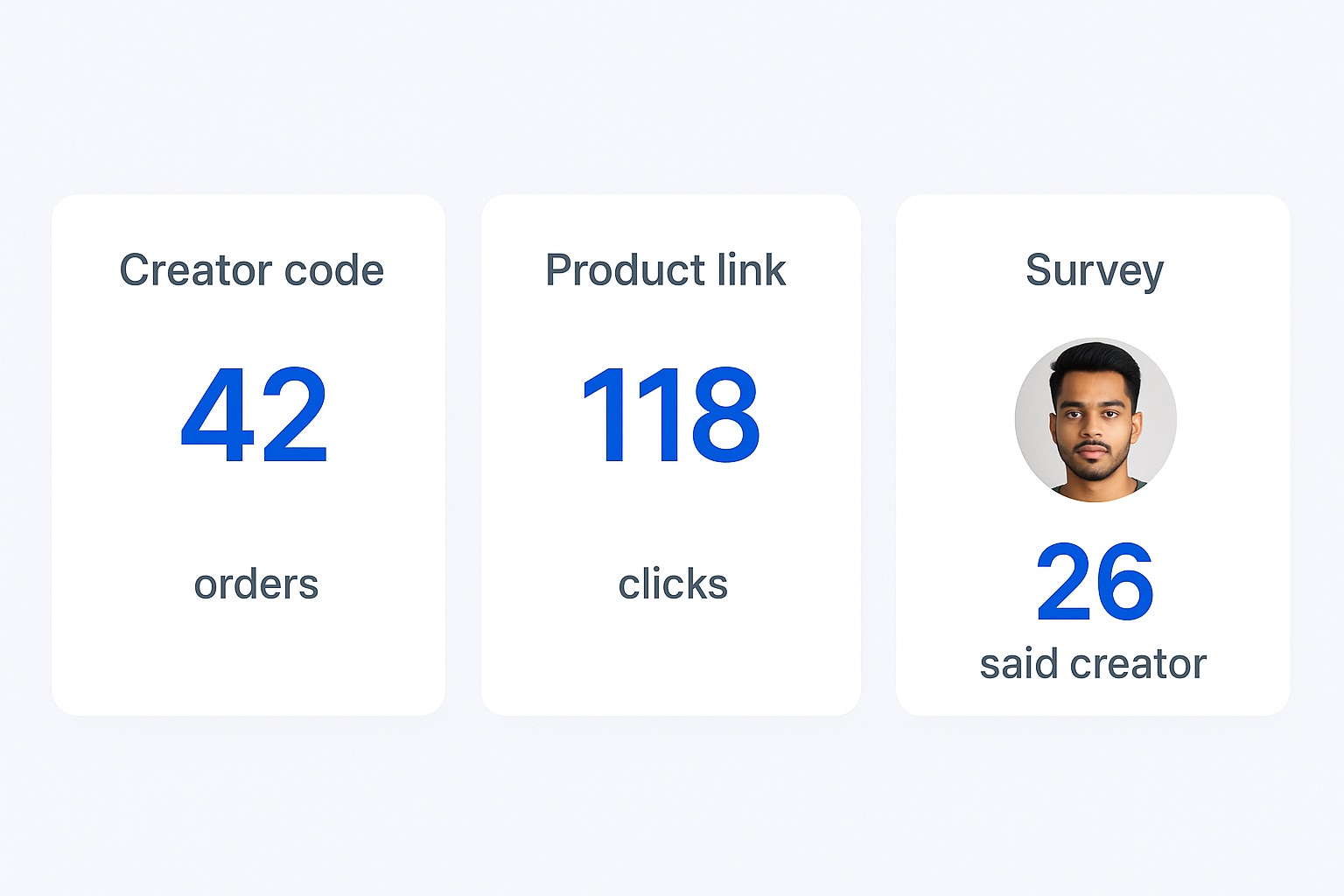
The campaign delivered. Reach was strong, the content looked good, and the client asked the obvious question: how many sales did it drive? Someone opens Shopify and the answer falls apart. Three creators never used the discount codes they were sent, two campaigns ran without UTM tags, and one creator’s affiliate link pointed at the homepage instead of the product.
That is not a measurement failure at the end of a campaign, it is a setup failure at the beginning. Here is the attribution stack a D2C programme needs, how creator selection should be decided, and what turns a series of collaborations into a revenue channel.
Why reach appears and revenue does not
Three gaps show up in almost every programme that reports impressions instead of sales, and all three are decided before launch.
No unique identifier per creator. A shared campaign code tells you the campaign worked. It cannot tell you which creator worked, so the next campaign repeats the same mix including the parts that did nothing.
Links that land in the wrong place. A UTM that points at the homepage loses the intent the creator built. The viewer arrived wanting a specific product and now has to find it.
Nothing catching unattributed demand. A meaningful share of creator-driven purchases never touches the link: someone sees the post, searches the brand later, buys on desktop. Without a post-purchase “how did you hear about us” question, that demand is invisible and the channel is undervalued.
Selecting creators against the buyer, not the look
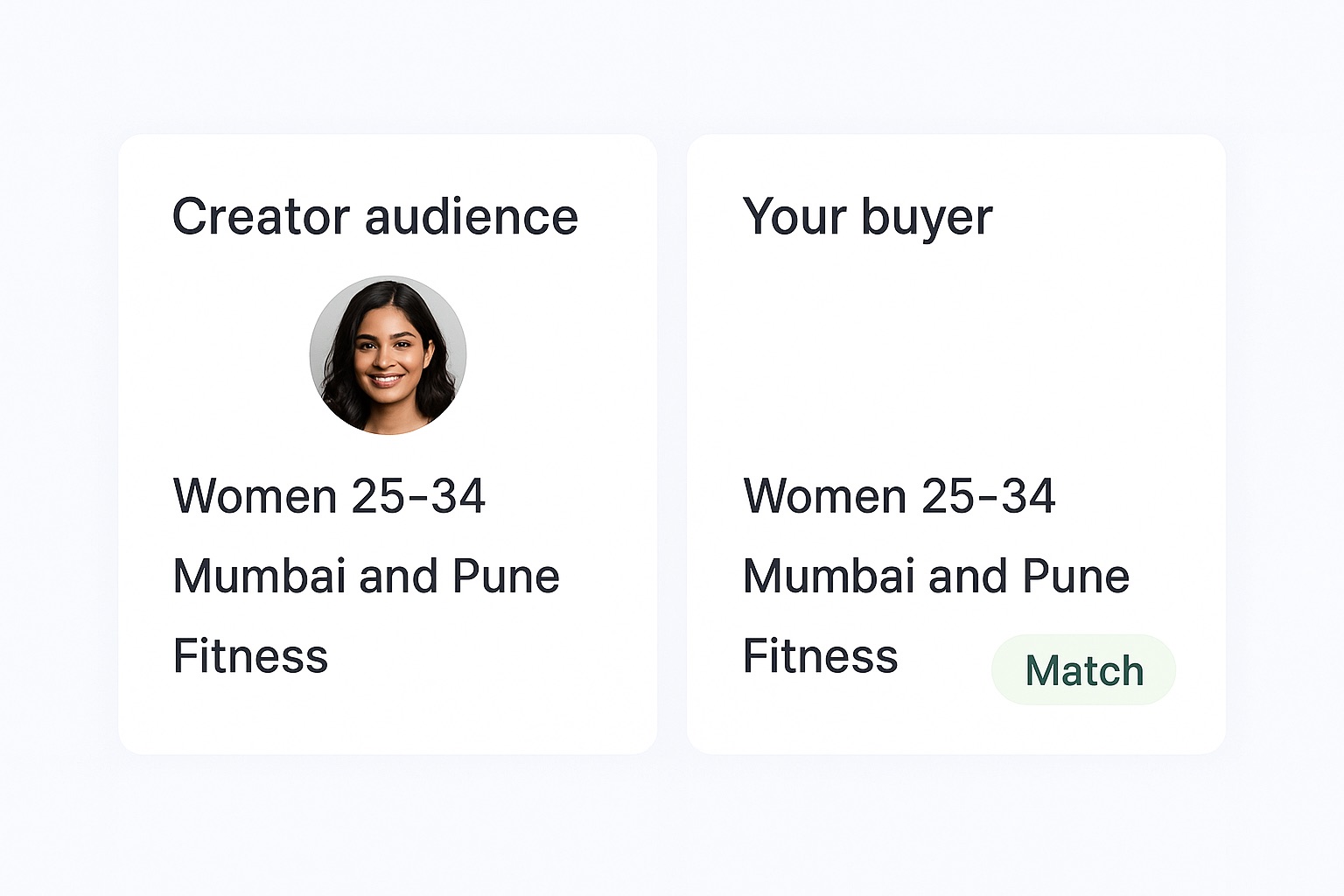
A creator with 5% engagement and a fitness audience is an excellent match for a sports nutrition brand and the wrong choice for a home decor brand. The numbers are identical in both cases. What differs is whether the audience is composed of people who buy this category.
For D2C that means selection runs against the buyer profile rather than the follower count: does the audience live where you ship, sit in the age band that buys, and already show interest in the category. The influencer suite filters on audience location, demographics and credibility together, which matters because a creator based in your market does not necessarily have an audience in it.
The attribution stack
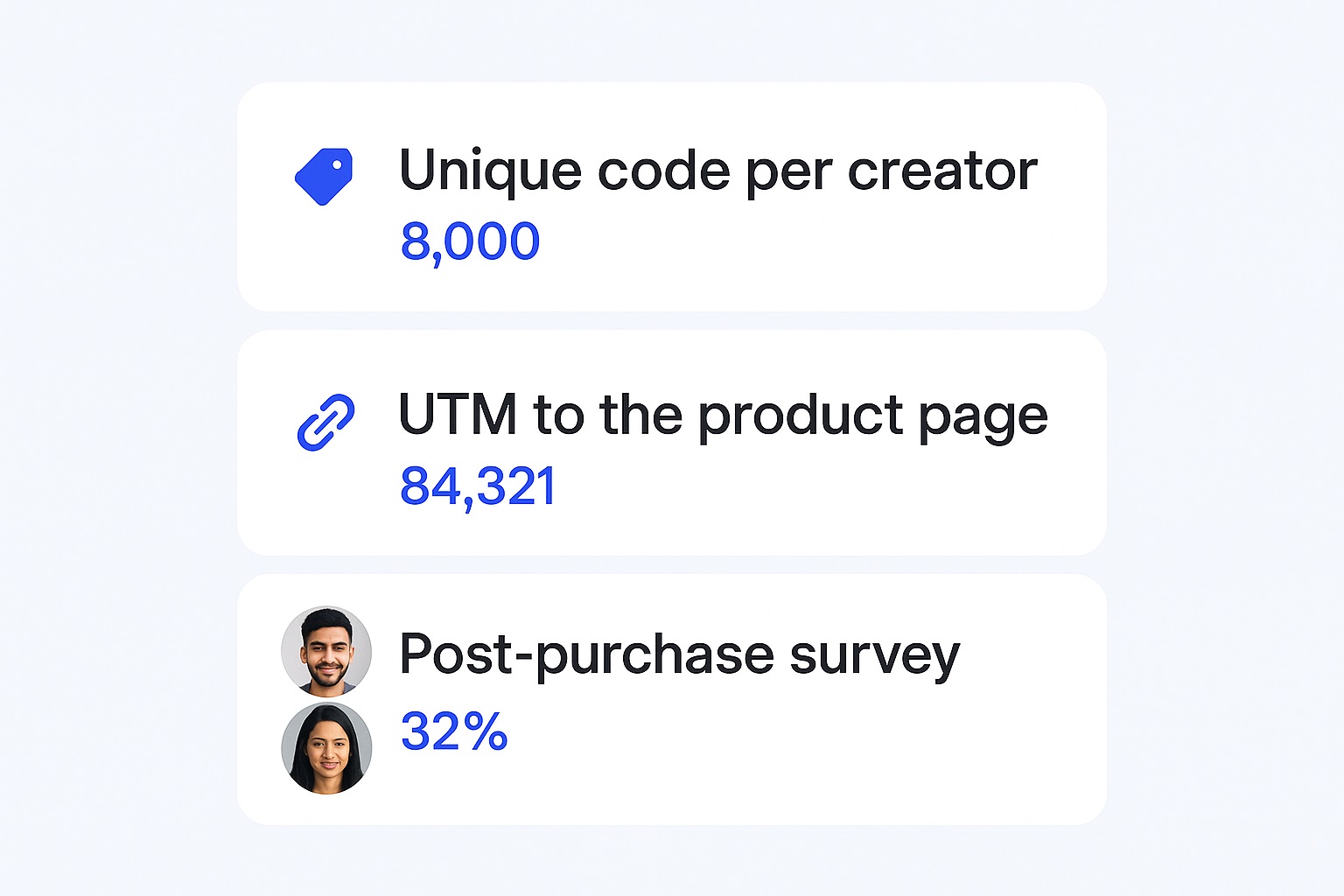
Three layers, and the programme needs all three because each catches what the others miss:
- A unique discount code per creator. Not per campaign. This is the cleanest signal and the easiest to set up, and it also gives the creator something to offer their audience.
- A UTM link to the specific product page. Product level, not homepage, so the click lands where the intent was created and the path is traceable.
- A post-purchase survey at checkout. One question, asked of everyone. This is the only layer that catches the delayed and cross-device purchases, and it usually reveals the channel is doing more than the codes suggest.
See CultureX in action
Find creators whose audience matches your buyer, keep them in one place between campaigns, and track what each one actually drove.
From campaigns to an always-on programme
Working with a creator once is a collaboration. What produces a revenue line is a programme: the same creators returning, improving, and staying attached to the brand between campaigns.
The practical requirement is a place creators remain connected when nothing is live, so each campaign does not start by rebuilding the list. The community suite holds that roster with structured member data, so activating the right people for a launch is a filter rather than a fresh search. Creators who have posted for you before also perform more predictably, because you have their actual numbers rather than a category benchmark.
What to measure
- Revenue per creator. Code plus UTM plus survey attribution combined, not just code redemptions.
- Cost per acquisition by creator. The number that decides who gets budget next time.
- Repeat purchase rate from creator-acquired customers. Whether the channel brings buyers or bargain hunters.
- Unattributed lift. Site traffic and branded search during the campaign window, which contextualises the tracked numbers.
For the measurement mechanics across platforms, see campaign tracking. For screening before you commit budget, follower analysis.
Frequently asked questions
What is D2C influencer marketing?
Using creators as an acquisition channel for a direct-to-consumer brand, measured on orders and cost per acquisition rather than on reach. The distinguishing feature is per-creator attribution rather than campaign-level reporting.
How do D2C brands measure influencer ROI?
With three layers together: a unique discount code per creator, a product-level UTM link, and a post-purchase survey. Codes and links catch direct conversions, the survey catches the delayed purchases that would otherwise make the channel look weaker than it is.
Which creator tier works best for D2C?
Usually micro, because niche relevance converts better than reach and the cost per acquisition stays workable. Nano creators suit testing and hyperlocal launches; macro makes sense when the objective is genuinely awareness rather than orders.
How does affiliate work in this model?
The creator earns on tracked sales through their code or link, which aligns incentives and makes ongoing relationships easier to sustain between paid campaigns. It works best layered on a flat fee rather than replacing it, since pure-affiliate deals tend to attract creators with less confidence in their own audience.
How is this different from a normal influencer campaign?
A campaign has a start and end date and reports reach. A programme runs continuously, keeps creators attached between activations, and reports revenue per creator, which is what allows budget to move toward what actually sells.