
The short version
- Instagram now optimises for watch time and sends, not likes. A brief that asks for “good engagement” is asking for the metric that stopped mattering.
- Saves and shares are the signals worth briefing for, which means asking for specific content types: how-to, checklists, comparisons, things people send to a friend.
- Explore placement now favours micro-creator content over macro accounts, which changes the case for paying a premium purely for reach.
The campaign was briefed the way campaigns have been briefed for three years: a set number of Reels, a set number of static posts, and a target engagement rate. It underperformed, and the post-mortem could not find anything that had been done badly.
That is usually the sign that the brief was written for an older version of the platform. Instagram’s ranking behaviour has moved, the formats that carry campaigns have moved with it, and a brief built around likes is optimising for a signal the algorithm now weights lightly. Here is what changed, and how a 2026 brief should read.
What actually shifted
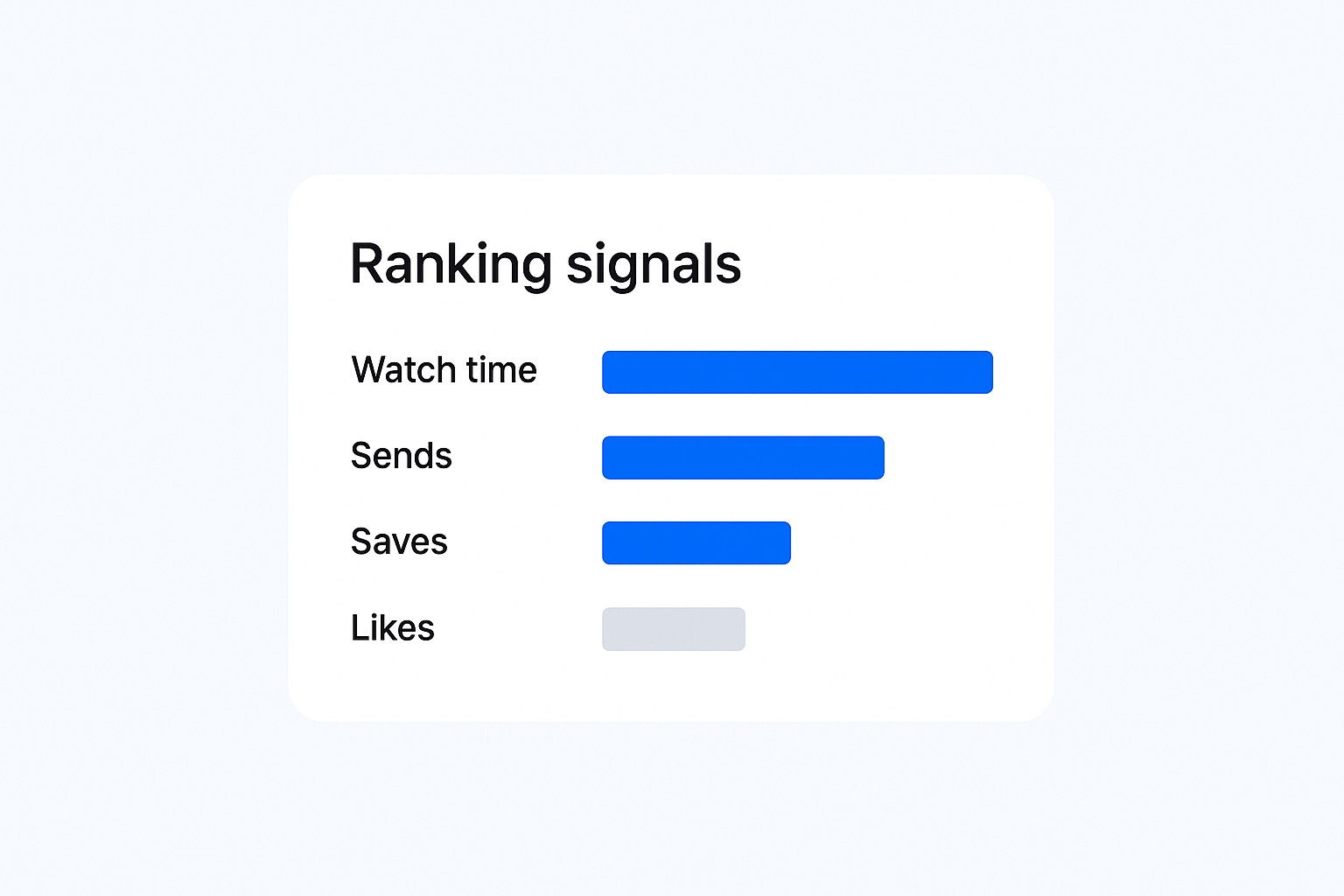
Three changes matter for how campaigns are built.
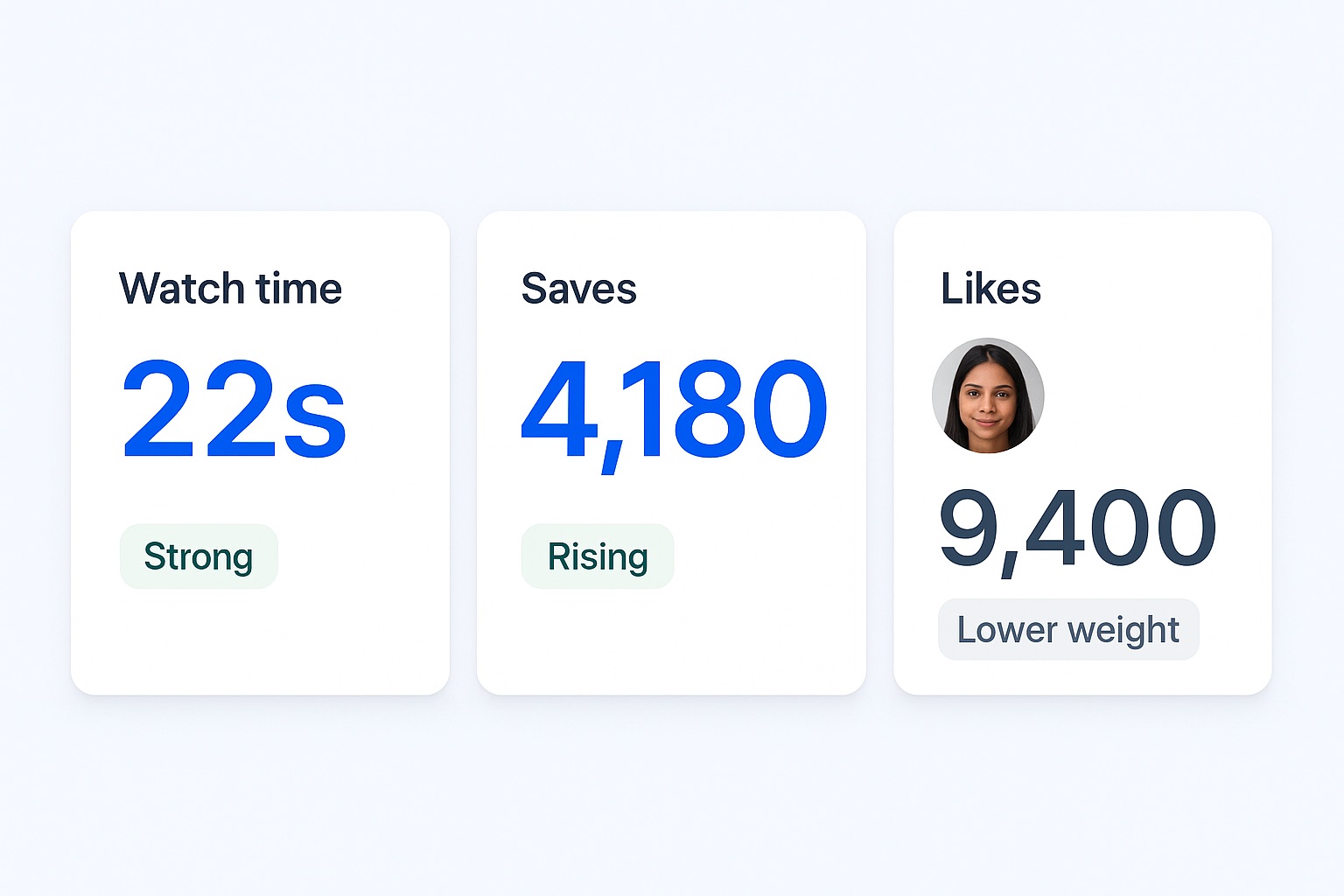
Watch time replaced the like as the primary signal. Creators noticed this before it was confirmed: feed reach fell, Reels performance became less predictable, and likes stopped moving distribution. Ranking now leans on how long people stay with a piece of content, which means a Reel that holds attention for twenty seconds beats one that collects likes in two.
Saves and sends outrank likes. A like is a low-cost reaction. A save is an intention to come back and a send is a recommendation to a specific person, and both are weighted accordingly. This is the part most briefs miss, because “good engagement” does not distinguish between them.
Explore favours micro-creator content. Micro accounts are picking up Explore placement that larger accounts are not, which is a structural change rather than a seasonal one. It weakens the specific argument for paying a macro premium in order to be discovered, though not the argument for paying it to reach a large existing following.
Briefing for saves and sends
If saves and sends are the signals, the brief has to ask for content that earns them, which means naming content types rather than describing a mood:
- How-to and step sequences. Saved because the viewer intends to follow them later.
- Checklists and comparisons. Saved as reference, sent to whoever is making the same decision.
- Genuinely useful specifics. Sizing, ingredients, prices, timings. The details people screenshot.
- Something worth sending. A recommendation a viewer would forward to one person by name, which is a higher bar than something they would merely enjoy.
Asking for “engaging content” leaves the creator to guess which signal you care about. Asking for a how-to they would expect people to save is a brief they can actually execute against.
Choosing a tier under the new rules
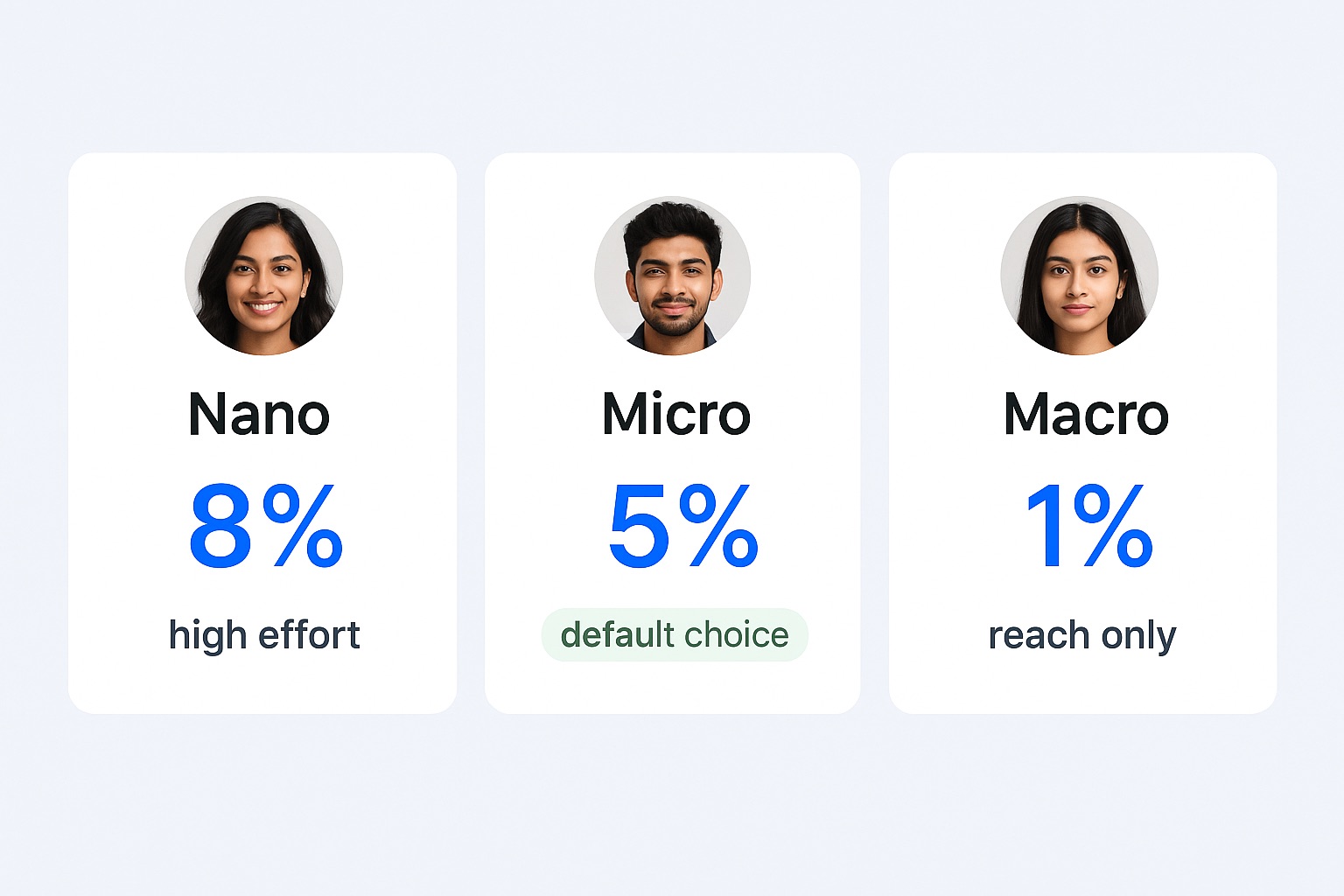
The tiers have not changed. What they are good for has.
- Nano, 1,000 to 10,000 followers. Engagement in the 5 to 10% range, and the strongest comment quality. Operationally expensive at volume: thirty nano creators is thirty relationships. Best for tests, hyperlocal briefs and campaigns where comment quality matters more than reach.
- Micro, 10,000 to 100,000. The default for most campaigns now, because it combines workable engagement with the Explore advantage. The tier where relevance to a niche does the most work.
- Macro and mega, 100,000+. Engagement typically falls to 0.5 to 1%. That is fine when the objective is genuinely CPM and the brief does not lean on engagement data to justify itself. It is a legitimate campaign type with different success criteria, not a worse creator.
See CultureX in action
Filter Instagram creators by audience location and credibility, then track saves, shares and watch time on live campaign content.
Measuring against the new signals
If the brief asks for saves and sends, the report has to show them. Reach and likes alone will make a well-performing campaign look flat, because they are measuring the part of the system that changed.
Three things belong in the report: watch time or average view duration on Reels, the save and share counts alongside likes rather than folded into a single engagement figure, and sentiment on the comments so a spike in activity can be read correctly. The tracking suite detects live posts automatically and reports these together, which matters because saves are not visible from the outside on someone else’s post.
Bringing an existing playbook up to date
Most teams do not need to rebuild their approach, only to correct the parts written for an older version of the platform. Start with these:
- The brief specifies a target engagement rate and nothing about content type.
- Reporting leads with likes and reach.
- Macro creators are chosen for discovery rather than for their existing audience.
- Nobody has looked at average view duration on the last campaign’s Reels.
For tier definitions and the wider India picture, the Instagram beginner’s guide has the full tables, and engagement rate benchmarks covers the arithmetic.
Frequently asked questions
What engagement rate should I expect in 2026?
Roughly 5 to 10% for nano, 3 to 6% for micro, and 0.5 to 1% for macro and mega. Judge against the tier rather than a single industry figure, and use median across posts rather than average.
Are micro-influencers more effective than macro?
For most objectives now, yes, partly because Explore favours their content and partly because niche relevance converts better. Macro still makes sense when the goal is reaching a large existing audience quickly and the campaign is measured on CPM.
How much does Instagram influencer marketing cost?
It varies by tier, niche and deliverable set, which makes headline rates unhelpful. The more useful comparison is cost per view and cost per engagement, because those account for whether the audience actually showed up.
How do I track an Instagram campaign properly?
Track watch time, saves and shares alongside likes and reach, and read comment sentiment rather than only counting comments. Detect live posts automatically instead of collecting screenshots, since saves and view duration are not visible externally.
How do I find the right Instagram creators?
Filter by audience location rather than creator location, check audience credibility before outreach, and look at how the creator’s branded content performed against their ordinary posts. Follower count is the least informative number available.