
The short version
- Finding creators in a category is easy. Finding creators whose audience fits your brand is the harder job, and it is the one that decides results.
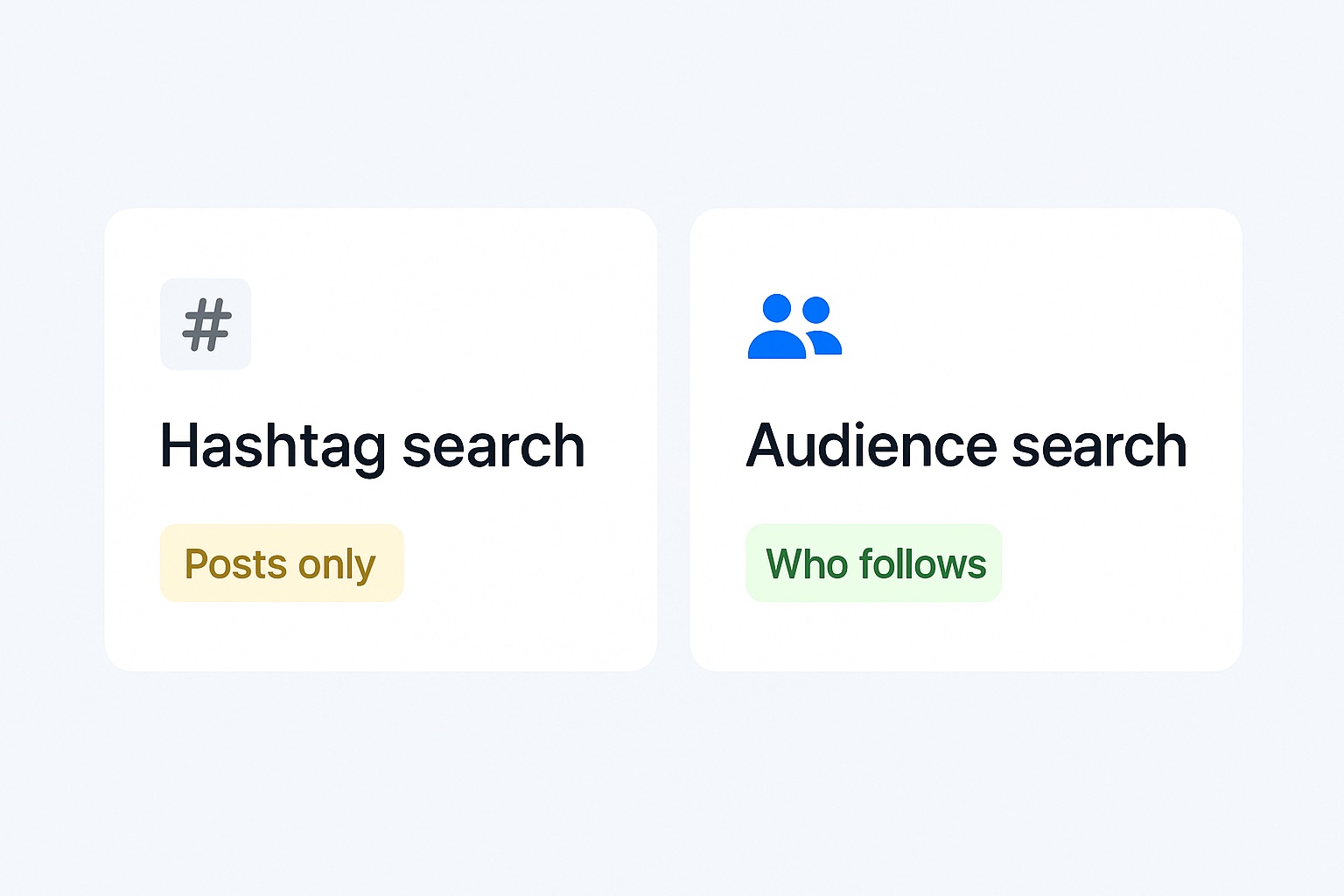
- Hashtag browsing returns people who post about the subject, including those who mention it occasionally and those whose followers live somewhere you do not sell.
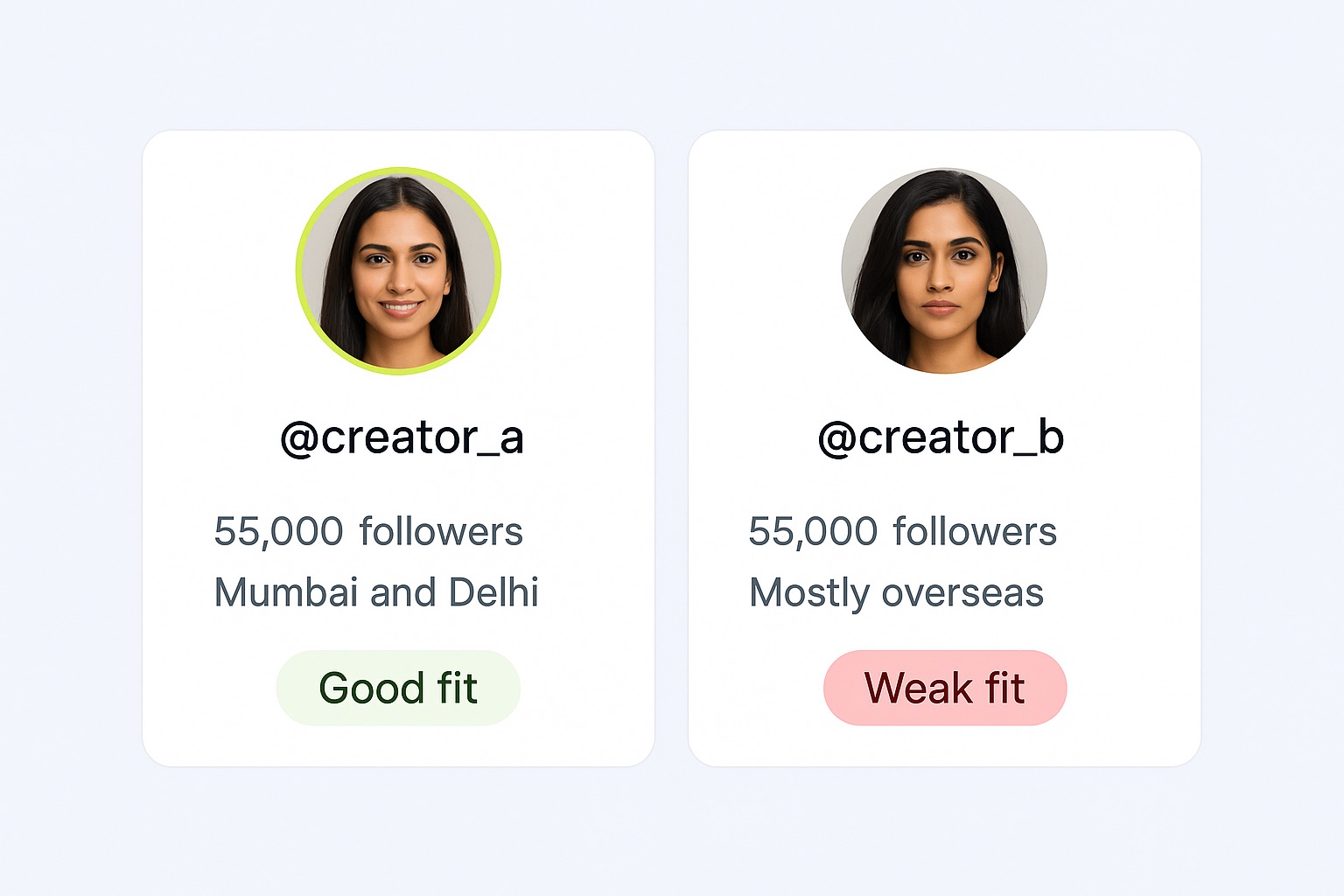
- Two creators at 55,000 followers can have completely different audiences. The follower count is the least informative thing on the profile.
The process usually looks like this. Search the category hashtag, scroll a few hundred posts, save promising creators to a spreadsheet, then start checking them one at a time. A day later there is a list, outreach goes out, and a handful reply. One turns out to have an audience concentrated outside India, another posts about skincare occasionally between unrelated content, and a third has the right numbers attached to followers who are not real.
Nothing there was done carelessly. The method simply answers a different question from the one that matters. What follows is what niche fit actually means, why hashtag search keeps missing it, and how to search for the thing you actually need.
What niche fit actually means
There are two separate questions hiding inside “is this creator a fit”, and most searches only answer the first.
Content fit asks whether the creator makes content in your category. Hashtag search answers this reasonably well.
Audience fit asks whether the people following them are the people you sell to: right age band, right cities, real accounts, already interested in the category. Nothing about a hashtag search touches this, which is why lists built that way shrink so dramatically once someone checks.
The gap between the two is easy to see once it is made concrete. Two creators, both around 55,000 followers, both posting skincare. One has an audience that is mostly real and active, women aged 22 to 35 in Indian Tier 1 cities. The other has followers spread across regions the brand does not operate in, with a noticeable share of inactive and suspicious accounts. Identical on the surface, entirely different propositions.
Why hashtag browsing keeps failing
Three things go wrong, and they compound.
- Tags describe the post, not the creator. Someone who mentions your category once appears next to someone who has built their whole account on it.
- Nothing about the audience is visible. The search surface shows content and follower count. Location, age split and credibility are not in the result, so they get checked one profile at a time afterwards, if at all.
- The creators who fit best may not use the tag. Plenty of strong niche creators do not tag consistently, so a tag-based method structurally excludes some of the best candidates.
How to search for audience fit instead
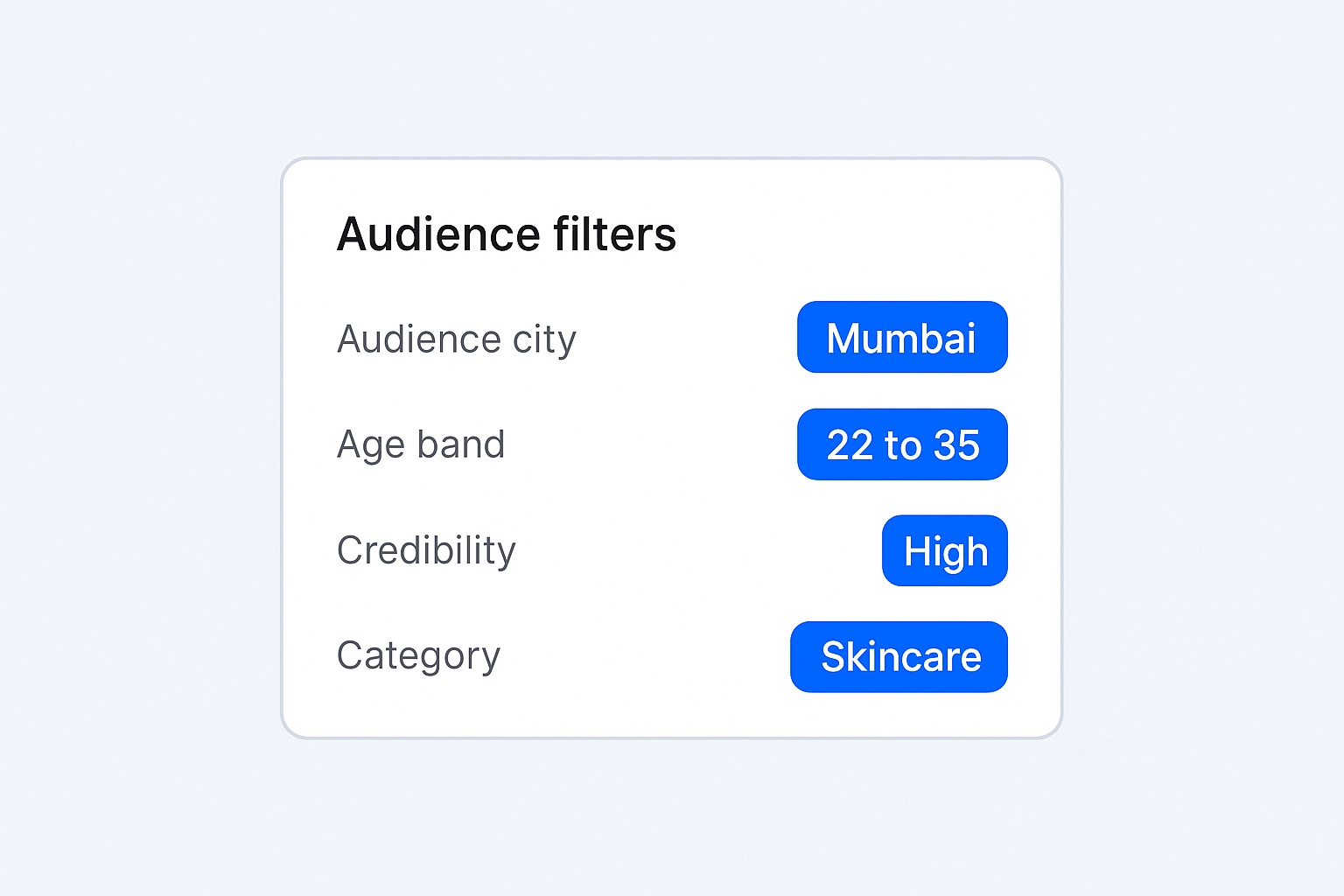
- Write the brief as a sentence first. “Skincare creators whose followers are women aged 22 to 35 in Mumbai, Delhi and Bengaluru, with high audience credibility.” That sentence names the audience, which a hashtag never does.
- Filter on audience location, not creator location. The distinction that changes results most. A Delhi-based creator with a Mumbai-heavy following is a good fit for a Mumbai campaign, and creator-location filters exclude them.
- Read recent content for tone, not the bio. The bio is positioning. The last twenty posts are what your brand would actually sit next to.
- Vet before outreach, not after. Check real follower percentage and suspicious rate while the list is still long. Once you have contacted someone, judgement gets anchored to the fact that they replied.
In the influencer suite these run as one pass across 400M+ profiles: category, audience location, demographics and credibility applied together, so what comes back is a pool that already meets the brief rather than a list to start filtering.
See CultureX in action
Search by who the audience is, not just what the creator posts, and see credibility on every profile before you shortlist.
Checking whether your current method holds up
A search method is working if the shortlist survives scrutiny. These four patterns suggest it is not:
- Shortlists collapse when checked. Twenty becomes six after someone looks at audience geography.
- Reply rates are low and replies are mismatched. Usually a sign the list was built on content alone.
- Building a list takes a day or more. Manual verification is doing work the search should have done.
- Nobody can state the audience criteria. If the standard is not written down, every shortlist is a different standard.
Once you have candidates, follower analysis covers the credibility checks, and engagement rate benchmarks covers reading their numbers correctly.
Frequently asked questions
How do I find influencers in a specific niche?
Define the audience rather than the category, then search on audience location, demographics and credibility alongside content relevance. A category search returns people who post about the subject; an audience search returns people whose followers are your buyers.
Why does hashtag search return the wrong influencers?
Because tags describe individual posts, not creators, and reveal nothing about who follows them. It also misses strong niche creators who simply do not tag consistently.
What is the difference between a creator’s niche and audience fit?
Niche is what they make content about. Audience fit is whether the people following them match your buyer. A creator can be perfectly on-niche with an audience that will never buy from you.
How many creators should a shortlist have?
Fewer than most teams assume, if the screening happened before the list rather than after. A screened shortlist of eight is more useful than an unscreened forty, because every name on it has already passed your criteria.
Should I check audience quality before or after outreach?
Before, always. It costs nothing while the list is long, and once a creator has replied there is a natural pull toward making them work rather than assessing them cleanly.