The short version
- Keyword filters search tags and follower counts. They cannot see whether a creator’s audience actually cares about the subject, or whether that audience lives in your market.
- AI discovery reads the brief as a sentence instead of making you break it into ten fields, then screens content style, brand-partnership history and audience credibility in the same pass.
- The practical gain is not novelty, it is order of operations: weak profiles are gone before a human ever opens them.
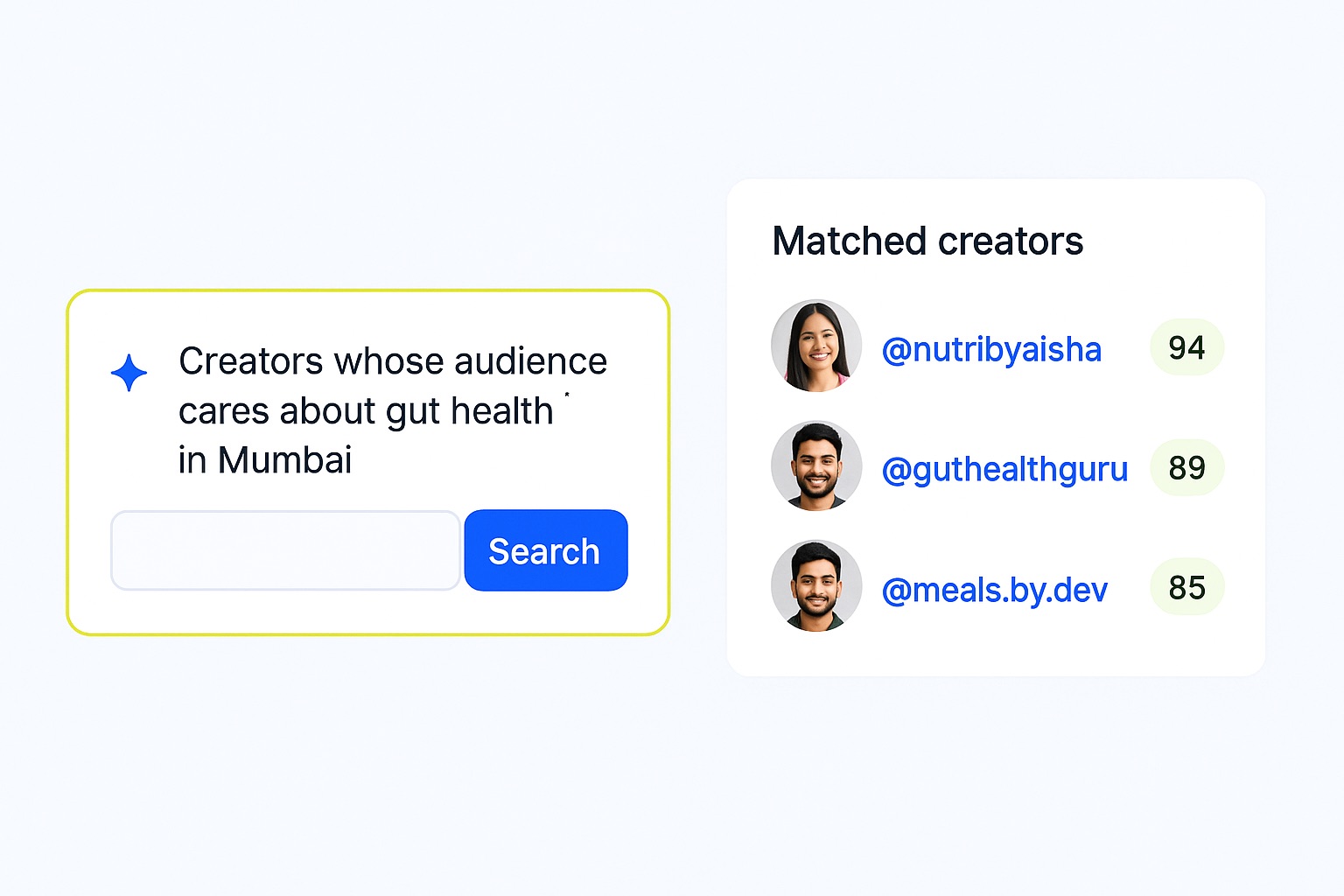
The brief was specific. Creators whose audiences genuinely care about gut health, followers concentrated in Mumbai and Delhi, and content that does not read like it was written off a brand script. Three hours later there is a shortlist of twelve, and then the checking starts: five have audiences mostly outside India, two have follower charts that do not make sense, and one turns out to have posted for a direct competitor last month.
Nothing went wrong there procedurally. The tool did what it was asked. The problem is that a brief written as a sentence had to be flattened into filter fields, and the things that actually decide fit were never in those fields to begin with. What follows is what AI-powered influencer discovery does differently, and where it genuinely changes the work rather than just renaming it.
Why keyword filters keep returning the wrong people
Tag-based search assumes creators label themselves accurately. Plenty do not. A fitness creator can post training content every day without ever using a fitness hashtag, and a lifestyle account can attach wellness tags to everything it publishes while its audience shows no particular interest in wellness at all. Search the tag and you get the second creator, not the first.
The deeper problem is what a filter result hides. A creator with 75,000 followers in the right niche looks like a clean match in a results table. The table does not mention that 18% of those followers are suspicious accounts, or that 65% of the audience lives outside the market you are selling into. Two creators at identical follower counts can be completely different propositions, and the filter treats them as interchangeable.
Then there is the part nobody has managed to turn into a field. Whether a creator sounds like a person or an advert, whether their promotional posts land differently from their ordinary ones, whether their audience treats a recommendation from them as worth acting on. Those judgements decide campaigns and none of them fit in a dropdown.
What AI discovery does with the brief
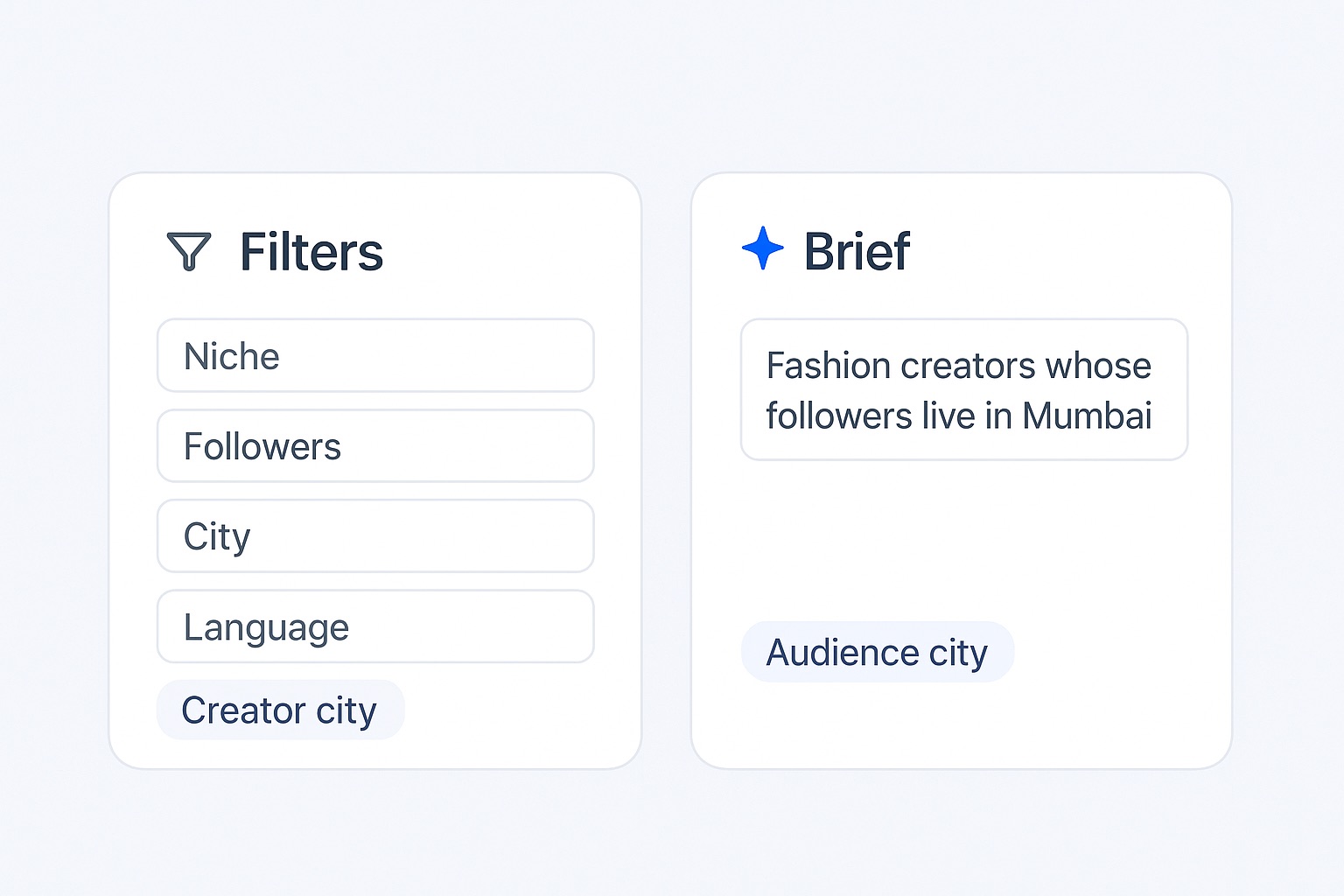
With a conventional tool you decompose the brief yourself: niche here, follower band there, location, engagement rate, language, each in its own box. Every simplification loses something, and the creators who would have been right but do not tag themselves the expected way fall out at the first step.
Natural-language search removes that translation step. You describe the campaign in a sentence and the system does the decomposition, including the parts you would not have thought to filter on. In the influencer suite that search runs across 400M+ profiles with 35+ filter dimensions available underneath it, so the sentence narrows the pool and the filters refine it, rather than the filters being the only way in.
One distinction matters more than any other here. A filter for “fashion creators in Mumbai” returns creators who live in Mumbai. What a campaign actually needs is creators whose audiences are in Mumbai, which is a different set of people and often a much better one. Audience location, age split, gender split and credibility are all screened together, so a creator based in Delhi with a Mumbai-heavy following is not quietly excluded for living in the wrong city.
The signals a filter cannot reach
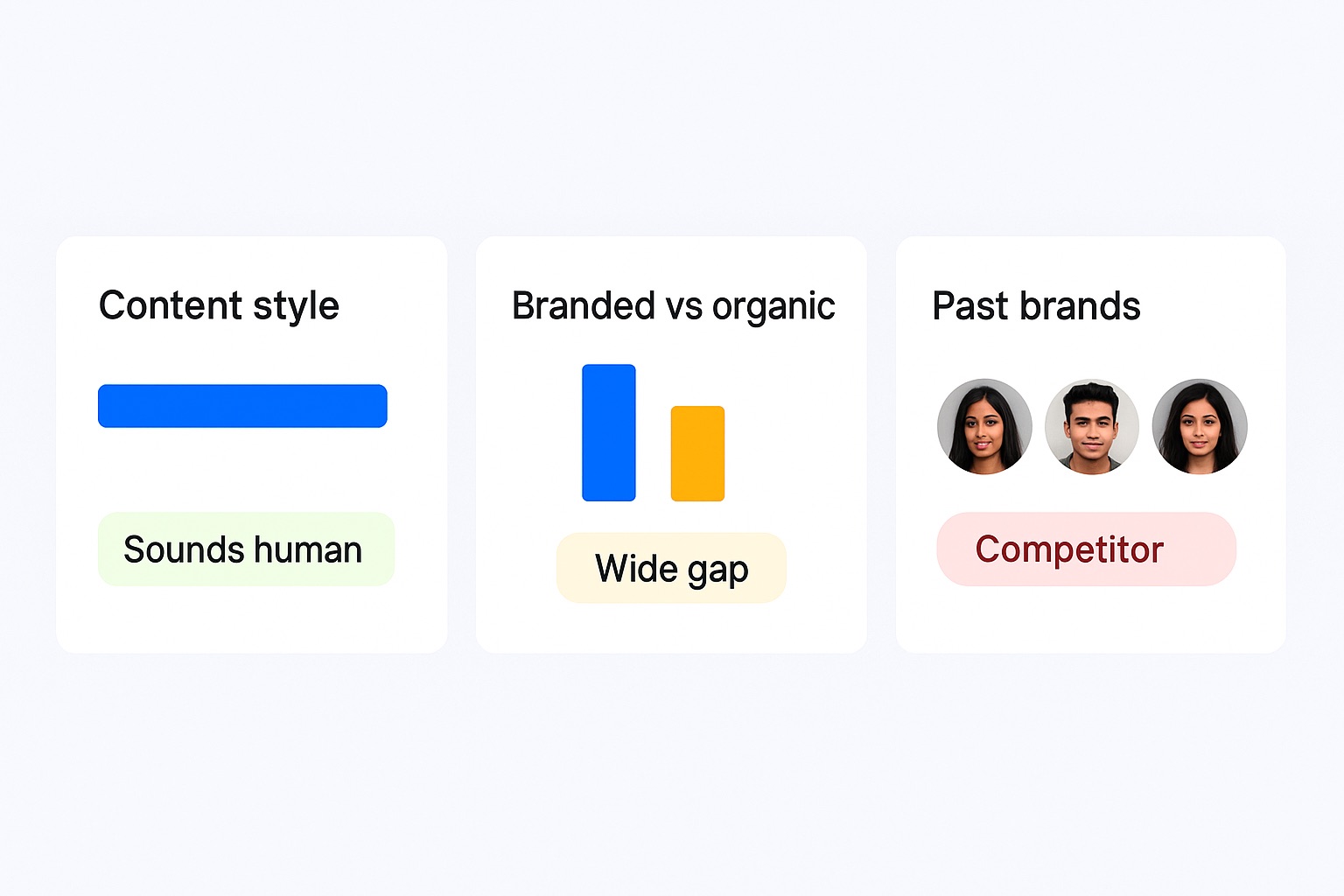
Beyond who the audience is, discovery has to say something about how the creator behaves. Three signals do most of that work:
- Content style and promotion density. How often brand content appears in the feed, and whether it reads like the creator or like a script they were handed. A creator posting a different sponsorship every week has trained their audience to scroll past.
- Branded versus organic performance. The gap between how ordinary posts perform and how sponsored ones do. A wide gap means the audience shows up for the creator but not for the brands they carry, which is exactly what you are about to pay for.
- Prior brand partnerships. Who they have already worked with, whether that includes your direct competitors, and whether they appear repeatedly in one competitor’s roster.
Audience credibility sits underneath all of it. Real follower percentage, suspicious account rate and Social Score are attached to the profile in the results, not fetched later, so a creator who fails your threshold never reaches the shortlist to be argued about.
See CultureX in action
Describe the campaign in a sentence and get creators screened for audience location, credibility and brand history in the same pass.
What discovery time is actually spent on
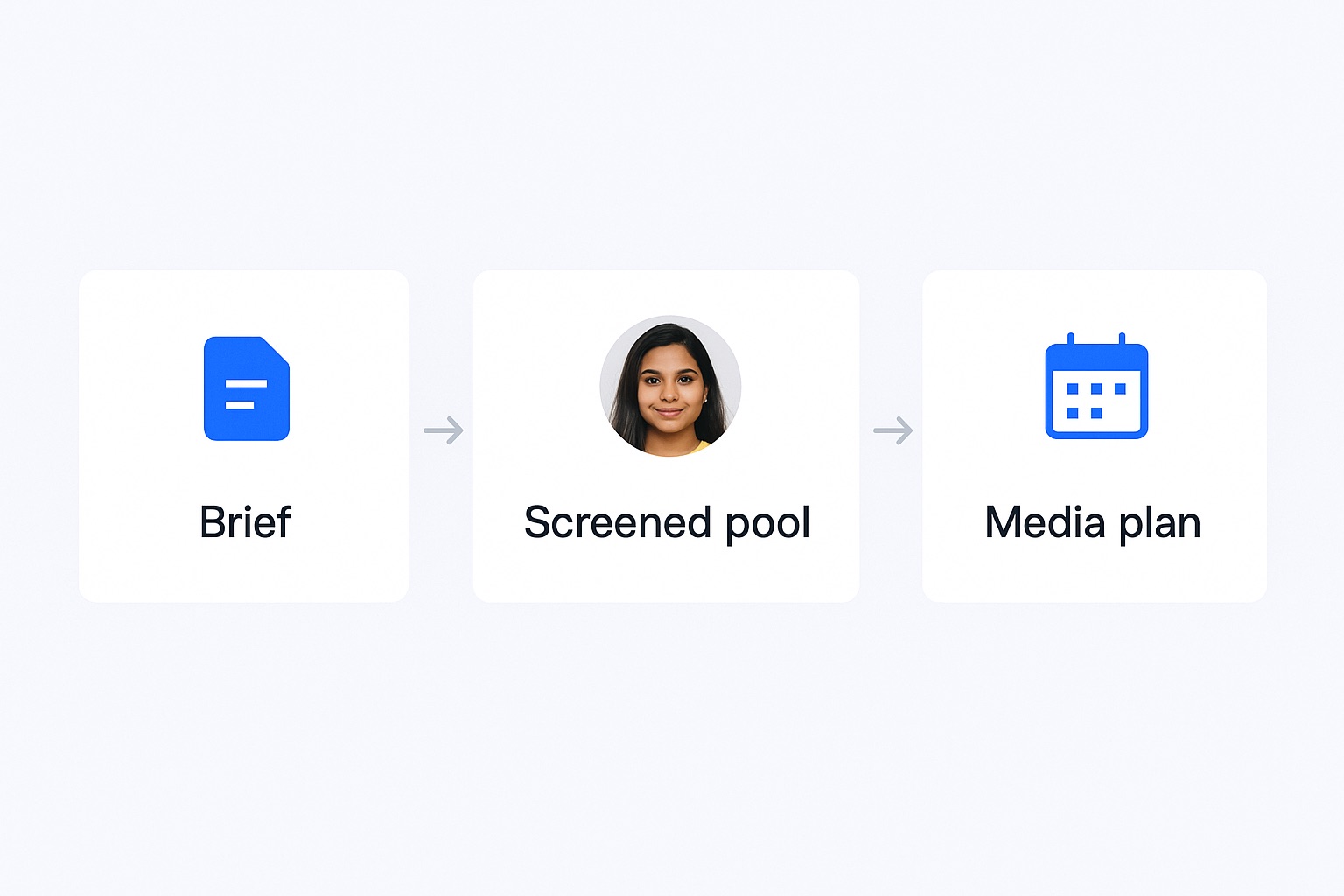
The hours in creator discovery are rarely spent searching. They are spent verifying a list that search already produced: opening profiles one at a time, reading comments, checking growth charts, cross-referencing audience geography against the target market, then discarding half of them.
Moving those checks in front of the shortlist is the whole point. The sequence becomes: describe the campaign, get a pool already screened for audience quality and location, save the survivors to a shortlist, and check audience overlap across that shortlist so you are not paying three creators to reach the same people. From there the list converts straight into a media plan rather than being retyped into one.
That last step matters more than it sounds. Overlap analysis is the difference between ten micro-creators at 100,000 followers each reading as a million-person campaign and reading as the unique audience it actually is.
Where this leaves the discovery step
Whether this is worth changing depends on where the current process actually loses time. Four patterns are specific enough to point at a cause:
- Shortlists shrink after the fact. A list of twenty becomes eight once someone checks audience geography and follower quality, which means the search was never really finished.
- The same names keep reappearing. Campaign after campaign draws from the handful of creators the team already knows, because finding new ones costs too much time to justify.
- Nobody can explain a pick. Selection rests on someone’s judgement rather than a threshold anyone wrote down, so the decision cannot be reviewed or repeated.
- Competitor overlap is discovered late. You learn a creator posted for a competitor recently when the contract is already out.
None of these are solved by a faster filter. They are solved by screening earlier. If you want the specific checks that belong in that screen, the follower analysis guide covers audience quality, and the niche fit guide covers relevance.
Frequently asked questions
What is an influencer discovery tool?
Software that searches a creator database and returns profiles matching a set of requirements. The useful ones go past follower count and tags to show who the audience is, how credible it is, and how the creator’s branded content has performed compared with their ordinary posts.
How does AI influencer discovery actually work?
You describe the campaign in plain language rather than filling in filter fields. The system interprets that description against profile data, content, audience composition and partnership history, and returns creators ranked on fit rather than on whether they used the expected hashtag.
How is it different from an influencer database?
A database is a list you query. Discovery software adds interpretation on top: audience quality screening, content and partnership analysis, and ranking against a brief. The database tells you who exists, discovery tells you who is worth approaching.
Does it reduce fake follower risk?
It changes when you find out. Real follower percentage, suspicious account rate and Social Score sit on the profile inside the results, so creators below your threshold are filtered out before shortlisting rather than caught during a manual audit afterwards, or missed entirely.
Can it replace agency-curated lists?
It replaces the manual research behind them, not the judgement on top. The pool arrives already screened for audience quality, location and competitor overlap, and a human still decides which of those creators suits the brand. What disappears is the fifteen hours spent assembling the list before anyone could exercise judgement at all.